
NMR Facilities in Cambridge: Vibration Control and Structural Chemistry Labs

Cambridge is one of the United Kingdom’s most important centres for nuclear magnetic resonance spectroscopy. Across chemistry, biochemistry, structural biology and materials science, the city hosts a dense array of high field spectrometers and specialist staff. For any modern NMR facility Cambridge is not merely a scientific resource but an engineering system. Superconducting magnets are acutely sensitive to floor vibration, acoustic noise and electromagnetic interference, so the surrounding building fabric must be designed as carefully as the instruments themselves.

This article surveys the core NMR infrastructure in Cambridge, explains how it underpins every major structural chemistry lab, and examines the increasing importance of the vibration-controlled building including the role of the new South Cambridge Science Centre SCSC which has been engineered with NMR suitable vibration performance.


The NMR Landscape in Cambridge

Within the University, the Yusuf Hamied Department of Chemistry operates a central NMR facility that provides analytical services to research workers in chemistry, other departments and external users. The facility covers routine and advanced solution state NMR for small molecules, polymers and materials and is integrated with mass spectrometry and other analytical platforms.

The department also hosts a dedicated solid state NMR facility, with two 400 megahertz systems, a 600 megahertz and a 700-megahertz spectrometer, widely used for materials, biomaterials and energy storage research.

Here, magic angle spinning and multi nuclear experiments allow researchers to probe disordered solids, interfaces and complex composite systems that are inaccessible to diffraction methods alone.

In the Department of Biochemistry, the Biomolecular NMR Facility is in the Sanger Building on Tennis Court Road. It provides three spectrometers operating at 500, 600 and 800 megahertz, all equipped with modern cryoprobes, and has core strengths in peptides, proteins, nucleic acids and carbohydrates. This facility is the backbone for solution state structural biology, ligand binding studies and dynamics measurements across the life sciences.

The Medical Research Council Laboratory of Molecular Biology MRC LMB adds another high-end NMR facility Cambridge can call on. LMB’s NMR centre is in a separate purpose built building and houses 500, 600, 700 and 800 megahertz instruments, all with cryoprobes, including an AstraZeneca spectrometer operated jointly with industry scientists. The goal is explicitly collaborative, integrating NMR into a broader structural biology pipeline that also includes X ray crystallography and cryo electron microscopy.

Beyond these, the Department of Earth Sciences operates wide bore NMR magnets such as a 9-point 4 tesla system for geological and materials applications, demonstrating that Cambridge’s NMR usage extends well beyond traditional chemistry and biochemistry into nuclear and earth sciences. Nationally, Cambridge appears as a key node in the United Kingdom NMR network. The Connect NMR UK directory lists high field instruments including 700 to 800 megahertz systems that contribute to shared national capability.


NMR as the Backbone of Structural Chemistry Labs

Together, these facilities underpin almost every structural chemistry lab in the city. In synthetic and mechanistic chemistry, solution state NMR remains the default method for verifying molecular structure and purity, but high field instruments and multidimensional experiments now routinely address

  • relative and absolute stereochemistry in complex natural products and drug candidates

  • mechanistic intermediates in organometallic and catalytic cycles

  • conformational equilibria and non-covalent interactions in supramolecular systems

In materials and solid-state chemistry, the dedicated solid state NMR suite is central to the characterisation of battery materials, glasses and hybrid frameworks, where long range disorder and local environments must be resolved simultaneously.

Structural biology in Cambridge likewise depends on NMR to complement crystallography and cryo EM. The Biochemistry and LMB facilities specialise in proteins, nucleic acids and their complexes, providing information on dynamics, intrinsically disordered regions and weak binding events that are difficult to capture in the crystal or in frozen vitreous ice.

In this sense, NMR is no longer a standalone technique. It is an embedded part of multimodal structural chemistry and biology workflows, where data from different platforms are combined to build coherent mechanistic and structural models.


Why Vibration Control is Critical for NMR

High field NMR magnets impose unusually stringent requirements on their host buildings. Superconducting magnets are tall, slender structures and even small floor accelerations can lead to field instabilities and line broadening. Instrument manufacturers and specialist engineers therefore specify vibration limits that are far tighter than those for typical office or teaching spaces.

Engineering guidance for NMR and other precision facilities highlights several core principles for a vibration-controlled building. Heavy, stiff ground bearing slabs are preferred. Structural separation is needed from vibration sources such as lifts and mechanical plant.

Services and structural grids must be detailed carefully to avoid directly coupling piping and ductwork to magnet foundations. In one case study of an NMR centre, designers used multiple magnet chambers with isolated slabs and high mass construction to meet stringent vibration criteria for 500 to 900 megahertz spectrometers, rather than locating magnets on standard suspended floors.

The MRC LMB building illustrates this approach in practice. All heavy plant is housed in a separate energy centre or in external service towers, explicitly to remove weight and sources of vibration from the laboratory itself, and services run in full height interstitial voids that can be accessed without entering lab spaces. This design strategy reduces both structural and operational vibration transmission to sensitive areas, including the NMR facility in its dedicated building.

Even where magnets have their own passive or active isolation, a poorly designed host building can overwhelm those systems. Retrofitting adequate isolation into generic office or laboratory blocks is often complex and expensive. For this reason, new NMR suites in leading research environments are increasingly housed in purpose designed structures where vibration and environmental control are treated as primary design drivers from the outset.


The Role of South Cambridge Science Centre SCSC

Historically, much of Cambridge’s highest specification NMR capacity has been located within university and research council buildings. However, the city’s growth as a commercial life science hub has created demand for NMR capable space in private developments as well. The South Cambridge Science Centre (SCSC) at Sawston is significant in this context.

SCSC is a new, purpose-built research and development park developed by Abstract Securities, delivering over 138,000 square feet of wet and dry laboratories in its first phase, with further phases consented. Its published technical specification is notable for explicitly targeting NMR and other highly sensitive techniques. The building is engineered to at least VC A vibration criteria, described as vibration criteria suitable for NMR and sensitive equipment, with clear floor heights, generous risers, fume hood capacity and standby power.

Promotional and planning materials emphasise market-leading vibration control, and recent articles describe SCSC as offering NMR-suitable vibration specification alongside full utilities for chemistry, microbiology and viral vector work, within a Net Zero Carbon, EPC A and BREEAM Excellent envelope. While SCSC is not itself an NMR facility, it has been deliberately designed to enable the installation of high field spectrometers and other vibration sensitive instruments without needing custom structural interventions.

Crucially, SCSC aims to provide this technical performance at lower occupational cost than competing schemes in Cambridge, at rents around 30 percent below market norms. For any company seeking to create an in-house NMR facility in Cambridge side by side with synthetic chemistry or analytical labs, the combination of NMR grade vibration control and cost-efficient space is attractive. It lowers the barrier to establishing NMR capability outside core university buildings and widens the set of possible locations for structural chemistry and structural biology.
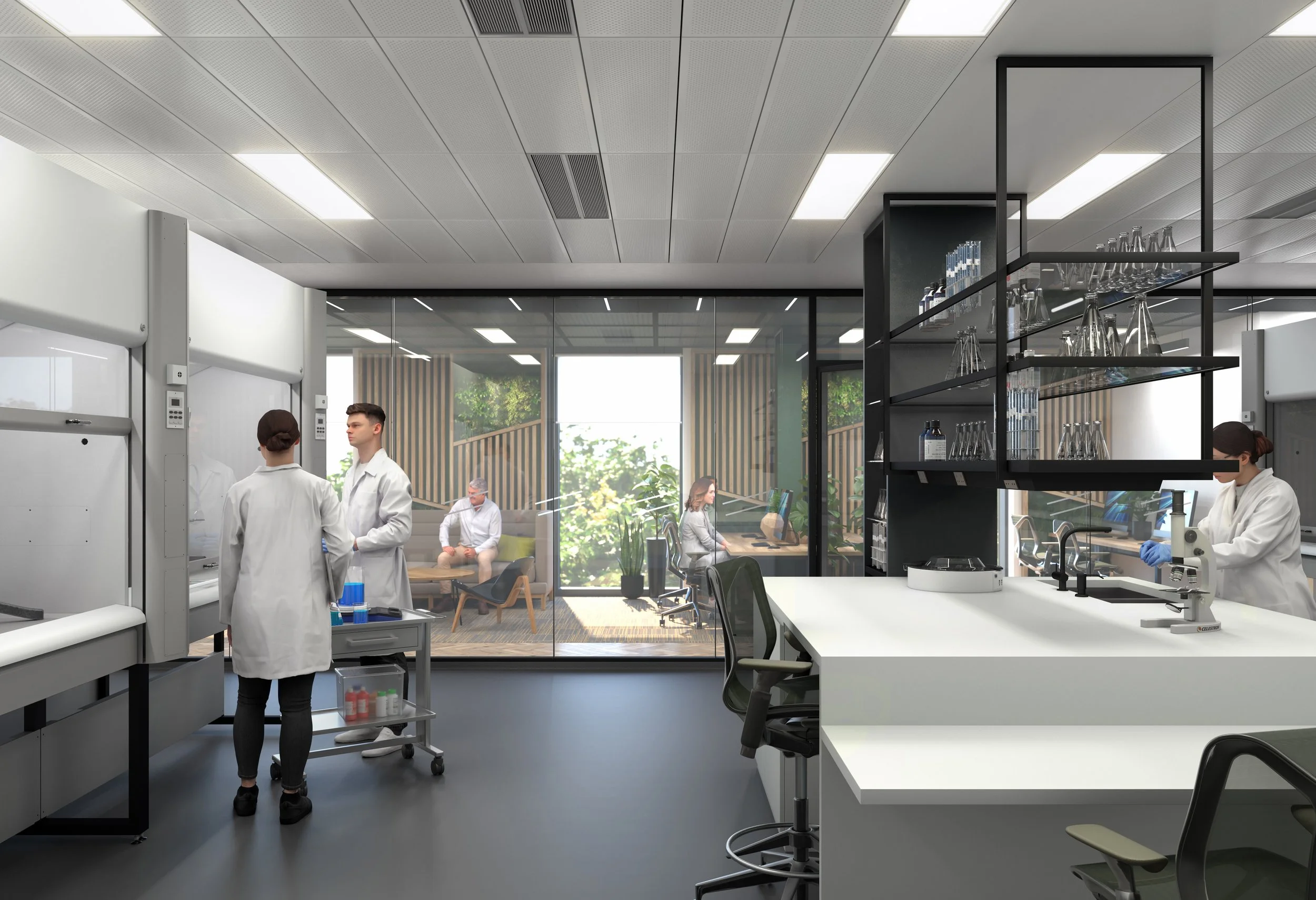
South Cambridge Science Centre Lab Space


Looking Ahead: Integrating Science and Structure

The United Kingdom NMR roadmap published for the Engineering and Physical Sciences Research Council noted that NMR is a core underpinning technology typically concentrated in departmental or faculty level facilities at research intensive universities. It highlighted the need for sustained investment in very high field systems. Cambridge fits that pattern, with major NMR centres in Chemistry, Biochemistry and LMB, while the emergence of high specification commercial campuses such as SCSC suggests a gradual broadening of where NMR can realistically be housed.

From a structural and engineering perspective, the message is clear. With the move toward higher fields, dynamic nuclear polarisation, in situ and in operando experiments and integration with other sensitive modalities, the tolerance for building induced noise only decreases. The future structural chemistry lab or integrated structural biology centre will rely on close collaboration between spectroscopists, structural engineers and developers to ensure that building vibration, thermal stability and services are aligned with instrument performance.

In that context, Cambridge offers an instructive model. Long standing, high performing NMR facilities embedded in research institutes are complemented by new private developments such as SCSC that are explicitly designed as NMR-ready vibration- controlled buildings. Maintaining and extending this dual infrastructure will be essential if Cambridge is to remain at the forefront of NMR driven structural science in the United Kingdom and internationally.
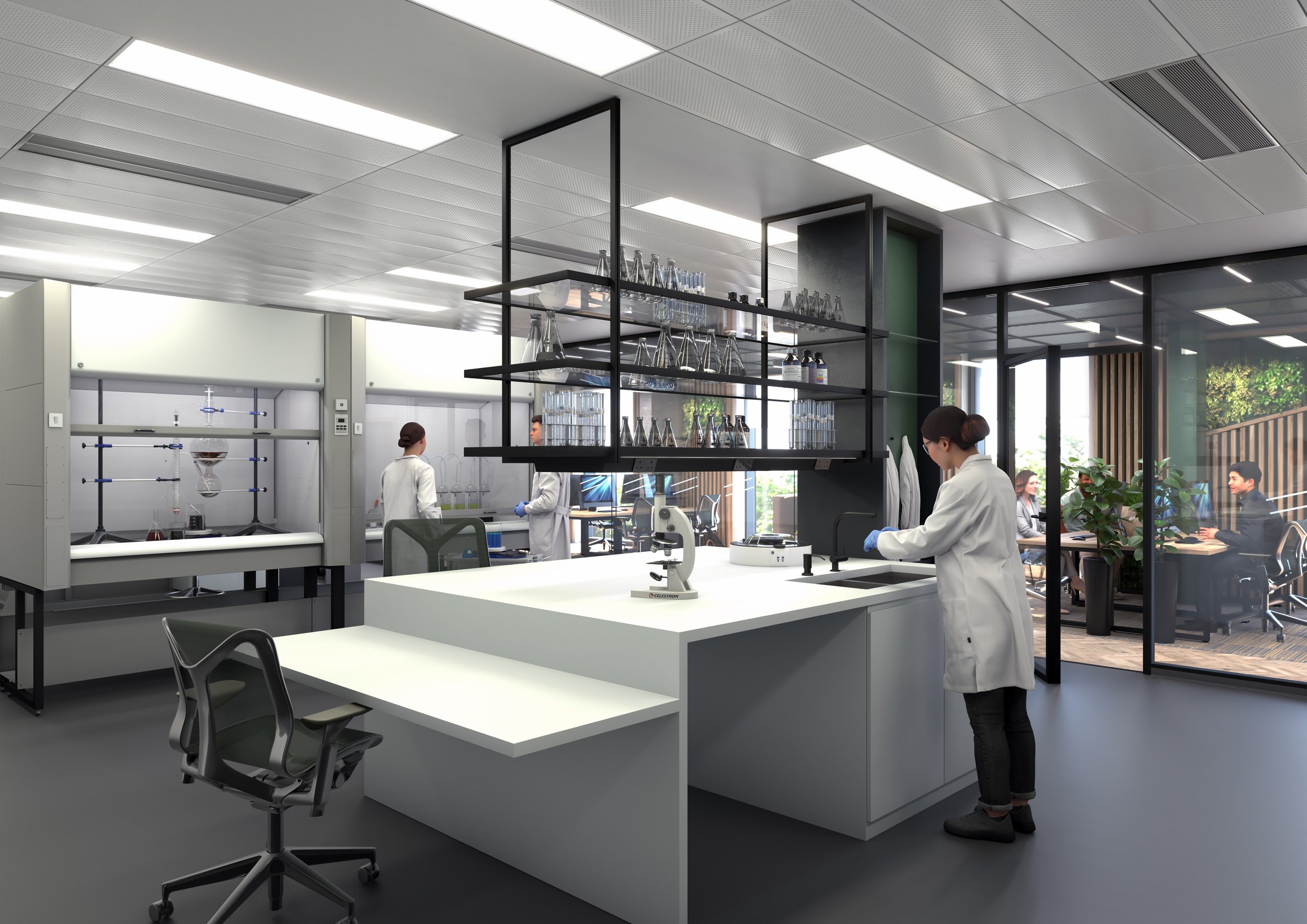
Microbiology Lab Space in Cambridge: From BSL 1 to BSL 2 Requirements

Cambridge remains the United Kingdom’s most advanced hub for biological and translational research, hosting a dense network of academic institutes, biotechnology firms, and startup incubators. Within this ecosystem, demand for compliant microbiology lab Cambridge facilities continues to rise as companies transition from basic bench work to controlled environments suitable for pathogenic or genetically modified microorganisms. The ability to move seamlessly from BSL 1 to BSL 2 environments is now a competitive advantage, allowing organisations to handle complex microbial and nucleic acid workflows safely while ensuring operational scalability and compliance.

This article examines the regulatory framework defining BSL lab space UK, outlines the practical distinctions between containment levels, and explores how Cambridge’s modern bacterial research facilities including new developments such as the South Cambridge Science Centre (SCSC) are integrating advanced laboratory design, space planning, and equipment such as biosafety cabinets and fluorescence microscopes to improve research productivity and biosafety.


Regulatory Framework and Containment Structure

The UK’s containment system for microbiology laboratories is governed by the Control of Substances Hazardous to Health Regulations 2002, guided by the Advisory Committee on Dangerous Pathogens and the Approved List of Biological Agents maintained by the Health and Safety Executive. Containment Levels 1 through 4 correspond broadly to international biosafety levels.

At the foundational BSL 1 Containment Level 1, work is restricted to well characterised, non pathogenic organisms that pose minimal risk to laboratory personnel or the environment. Conversely, BSL 2 Containment Level 2 encompasses Hazard Group 2 agents, organisms capable of causing disease but unlikely to spread widely in the community provided appropriate containment measures are maintained.

Researchers must also comply with the Genetically Modified Organisms Contained Use Regulations 2014 if experiments involve recombinant DNA or genome editing activities. Notifications to the HSE are required for higher risk modifications and risk assessments must explicitly cover containment procedures, waste treatment, and staff training. This regulatory oversight ensures that each microbiology lab Cambridge facility maintains uniform safety standards whether embedded within a university or located in a private bacterial research facility.


Laboratory Design and Engineering Controls

Transitioning from BSL 1 to BSL 2 involves both physical and procedural upgrades. The most visible distinction is in laboratory design and how the space is organised, ventilated, and equipped. Effective space planning is essential, with well defined clean and dirty zones, adequate clearance around lab benches, and the integration of directional airflow which all contribute to safe operations and improved workflow.

BSL 1 Configuration

A standard BSL 1 laboratory offers open access to low risk areas with basic containment provided by hand washing facilities and easily cleanable lab benches. Work at this level rarely requires containment equipment although small scale molecular biology may still utilise bench top centrifuges or PCR thermocyclers for nucleic acid amplification. The focus is on simplicity, flexibility, and low operational overhead.

BSL 2 Configuration

In contrast, BSL 2 environments are purpose built to handle moderate risk microorganisms or samples of human origin. Access is restricted to trained personnel and procedures generating aerosols or droplets must be conducted in certified biosafety cabinets typically Class II units that provide simultaneous protection for the operator, the experiment, and the surrounding environment. These cabinets are rigorously tested and certified under BS EN 12469 standards to maintain laminar airflow and HEPA filtered exhaust.

Lighting, airflow, and bench layout are coordinated to support safety and efficiency. For example, dedicated alcoves for fluorescence microscopes allow real time observation of microbial gene expression, cell viability, or labelled nucleic acid probes without cross contamination. Integrating such imaging capabilities within the CL2 envelope improves efficiency by reducing the need to transfer material between rooms.

Autoclaves or steam sterilisers must be available either within the suite or on the same floor ensuring biological waste can be treated immediately after use. Drainage systems, impervious wall coatings, and sealed flooring complete the containment envelope. The entire system from ventilation ducts to emergency eyewash stations is verified periodically to ensure ongoing compliance.

South Cambridge Science Centre


Operational Protocols and Personnel Management

Procedural rigor distinguishes CL2 laboratories from lower levels. Each facility must maintain a biosafety manual detailing local rules, access restrictions, and emergency procedures. Staff receive induction and refresher training including spill management, sharps handling, and exposure reporting. Vaccination policies such as tetanus or hepatitis B immunisation are implemented where risk assessments indicate benefit.

All waste, cultures, and sharps are treated as infectious until sterilised. Autoclaving logs are maintained and reviewed for validation. Chemical disinfectants such as hypochlorite solutions or peracetic acid are prepared fresh to ensure activity against bacterial spores and viral particles.

Increasingly, laboratories deploy real time digital monitoring systems to track cabinet airflow, room differential pressures, and autoclave cycles. This integration of sensors into building management systems provides continuous assurance of containment performance and enables predictive maintenance, a feature that modern BSL lab space UK developments including those in Cambridge have prioritised.


Cambridge as a Microbiology Hub

The Cambridge region hosts one of the largest concentrations of microbiology and bacterial research facilities in Europe. Three major clusters define the landscape.

Babraham Research Campus

Situated south of the city, Babraham combines academic excellence with commercial infrastructure. Its CL2 laboratories accommodate microbial genetics, cell biology, and immunology projects with shared autoclaves, imaging suites, and analytical services. The campus layout exemplifies optimal space planning, providing modular lab benches and central service corridors that improve efficiency by minimising instrument bottlenecks.

Wellcome Genome Campus Hinxton

This cluster integrates large scale sequencing and bioinformatics with wet lab capability. Many laboratories operate at CL2 to handle clinical isolates and genomic samples. Fluorescence microscopes and high throughput plate readers support real time cellular imaging and expression analysis of microbial genes. The synergy between data and wet lab teams makes the Genome Campus a global reference point for systems microbiology.

South Cambridge Science Centre SCSC

Located at Sawston, SCSC represents the next generation of microbiology lab Cambridge infrastructure. Completed in 2025, the campus offers over 138000 square feet of wet lab and office space designed to meet or exceed BSL 2 specifications. The architecture integrates flexible laboratory design modules, adjustable lab benches, and pre installed services for gas, vacuum, and purified water.

Crucially, SCSC offers approximately 30 percent lower occupancy costs than equivalent new build sites in the city centre, enabling smaller companies to allocate capital toward research rather than rent. The inclusion of shared biosafety cabinets, microscopy suites, and fluorescence microscopes ensures that even small tenants can conduct advanced bacterial and nucleic acid studies.

SCSC’s emphasis on modular engineering and sustainability such as low vibration slabs and redundancy in ventilation systems positions it as one of the most adaptable BSL lab space UK developments for microbiology and molecular diagnostics. Frontier IP Group’s recent commitment to operate an accelerator hub on site further enhances access to funding, mentorship, and translational support for microbial biotechnology ventures.


Designing for Adaptability and Future Compliance

From an academic perspective, the evolution of microbiology facilities in Cambridge underscores the importance of laboratory design that anticipates scientific change. Research in microbial genomics, synthetic biology, and antimicrobial resistance demands rapid adaptation of physical infrastructure.

New developments now plan for real time environmental monitoring, flexible ductwork for future ventilation upgrades, and modular casework enabling rapid conversion between CL1 and CL2 zones. Ergonomic space planning, including adjustable height lab benches and movable biosafety cabinets, supports diverse workflows from classical culture to microfluidic analysis. The inclusion of multi modal imaging such as fluorescence microscopes within containment suites further expands experimental range without compromising biosafety.

This shift from static design to adaptive architecture not only enhances researcher safety but improves efficiency, reducing downtime during expansion or certification cycles. Cambridge’s new facilities exemplify this paradigm, embedding sustainability, digital oversight, and biosafety into a single integrated model.


The Broader National Context

While Cambridge remains the UK’s benchmark for microbiology infrastructure, similar investments are underway in Oxford, Manchester, and Stevenage. Yet few regions offer the same density of CL2 ready space coupled with immediate access to academic collaborators, venture capital, and clinical networks. For organisations comparing BSL lab space UK options, Cambridge provides an unparalleled mix of quality, compliance, and ecosystem integration.

Across the region, the combination of thoughtful space planning, certified biosafety cabinets, shared fluorescence microscopes, and embedded digital controls demonstrates how the next generation of bacterial research facilities can balance containment with productivity.


Conclusion

The microbiology sector’s success depends not only on the brilliance of its science but also on the quality of the environments in which that science is performed. As microbiological research in Cambridge advances from safe manipulation of model organisms to sophisticated nucleic acid editing and pathogenic studies, laboratories must evolve to meet rising containment and efficiency demands.

Modern developments such as the South Cambridge Science Centre now provide a template for integrated laboratory design with modular lab benches, automated biosafety cabinets, shared imaging facilities, and sensor driven real time monitoring. Collectively, these innovations improve efficiency, reduce risk, and expand accessibility to world class microbiology space.

In this respect, Cambridge not only leads the UK in scientific output but also in the architectural and operational standards that define modern biosafety. Its ecosystem bridging academia, startups, and industry illustrates how purposeful design and planning can translate into safer, faster, and more productive science across every stage of microbial discovery.

Funding for Cambridge Life-Science Startups

For an early-stage life-science founder, assembling a coherent capital stack of non-dilutive grants, tax incentives, and appropriately staged venture capital can mean the difference between achieving key milestones or facing premature dilution. This article outlines some of the principal funding pathways available to Cambridge life-science companies.

1. Non-Dilutive Grants: Overview and Eligibility

Biomedical Catalyst (Innovate UK).

The Biomedical Catalyst remains the UK’s flagship grant mechanism for translational biomedical innovation. It supports feasibility, early-stage, and late-stage development projects across therapeutics, medical devices, diagnostics, and digital health. Each round focuses on improving commercial readiness and clinical applicability, offering matched funding to bridge the gap between discovery and market entry.

NIHR i4i (Invention for Innovation).

The NIHR i4i programme finances product development for medical technologies, diagnostics, and digital tools from proof-of-concept through to pre-commercial evaluation. Its Product Development Awards (PDA) and Challenge Awards are particularly relevant for ventures with NHS partners and demonstrable routes to patient benefit.

BBSRC and EPSRC translational calls.

These councils periodically release calls under “Transformative Healthcare Technologies” and related initiatives, supporting enabling platforms such as computational biology, biomaterials, and bioprocessing. Though frequently academic-led, these grants often fund collaborative projects involving spinouts or partner companies.

Cancer Research Horizons (CRUK).

CRUK’s seed and venture creation funds target oncology-focused discoveries, providing early capital and technical validation to de-risk preclinical assets. This structure increasingly includes co-investment opportunities with venture partners.

Updated Innovate UK Smart competitions.

Innovate UK has recently replaced traditional Smart Grant calls with targeted pilots that emphasise strategic impact areas. Early-stage ventures should now align with Catalyst-style or challenge-led funding windows rather than expect open Smart competitions.

Cambridge advantage:

Grant assessors emphasise feasibility and deliverability. A Cambridge location offers immediate access to academic partners, clinical sites, and translational facilities. These are factors that significantly strengthen a proposal’s credibility and execution plan.

Quarter Programme Typical Award Size Status Notes
Q1 2025 Biomedical Catalyst (Feasibility) £250k–£1m Open Focus on early validation and platform development
Q2 2025 NIHR i4i Challenge Awards Up to £1.5m Open Must involve NHS partners
Q3 2025 Biomedical Catalyst (Late Stage) £1m–£3m Anticipated For preclinical/early clinical translation
Q4 2025 BBSRC/EPSRC Transformative Healthcare £500k–£2m Expected Platform and cross-disciplinary innovation
Continuous CRUK Seed / Commercialisation Variable Rolling Oncology and enabling technology emphasis
Continuous Innovate UK Smart Pilot Calls £250k–£1m Rolling Aligned to government priority sectors

2. Tax Incentives: Stretching Capital Further

Two cornerstone incentives continue to underpin the UK’s life-science investment environment:

  • R&D Tax Relief (Merged SME/RDEC).
    Since April 2024, the UK has operated a merged R&D regime allowing eligible companies to claim enhanced deductions or payable credits for qualifying R&D expenditure. For early-stage life-science companies operating at a loss. This can deliver a meaningful annual cash inflow, effectively extending runway.

  • SEIS and EIS Investor Reliefs.
    The Seed Enterprise Investment Scheme (SEIS) offers investors 50% income-tax relief on investments up to the scheme’s limit, while the Enterprise Investment Scheme (EIS) provides 30% relief for larger rounds. Both schemes offer capital gains deferral and loss relief. These remain powerful mechanisms for attracting early private capital into risk-intensive sectors such as biotechnology.

The Cambridge advantage:
Investors familiar with SEIS and EIS view Cambridge-based ventures as lower risk due to proximity to research excellence, serial founders, and experienced legal and advisory infrastructure. The credibility of the ecosystem helps accelerate investor decision-making.

3. Venture Capital and Angel Ecosystem

Cambridge hosts the most integrated venture network in the UK life-science sector:

  • Cambridge Enterprise.
    The University’s commercialisation arm manages evergreen and discovery funds to seed and scale university spinouts. Its involvement frequently validates scientific provenance and accelerates syndicate formation.

  • Cambridge Innovation Capital (CIC).
    CIC, which recently established a £100 million Opportunity Fund, invests across seed to growth stages in life sciences and deep tech, addressing the UK’s long-recognised late-stage funding gap.

  • Cambridge Angels.
    Two of the country’s most active angel groups, Cambridge Angels and Cambridge Capital Group provide early equity to seed and pre-Series A companies, often syndicating with venture funds and supporting follow-on rounds.

Evidence from existing incubators, particularly Babraham Research Campus, indicates that Cambridge-based companies secure higher aggregate funding and faster progression from seed to Series B compared to peers elsewhere in the UK. The combination of co-location, reputation, and capital depth continues to make the region the most productive environment for life-science ventures.

4. Why Relocation to Cambridge Enhances Fundability

Relocation to Cambridge offers structural advantages across several fronts:

  1. Proximity to Translational Partners.
    Co-location with world-class institutions, including Addenbrooke’s Hospital, the University of Cambridge, and numerous CROs and CDMOs, enables more rapid experimental iteration and clinical engagement.

  2. Density of Capital and Expertise.
    The presence of angels, venture funds, and strategic investors in one compact geography shortens the fundraising cycle and reduces travel friction.

  3. Perception of Credibility.
    Investors and grant assessors alike associate Cambridge-based locations with high-quality science and operational competence, reinforcing fundability.

However, premium locations near the Biomedical Campus and the city’s north cluster have historically suffered from high rents and limited lab availability. These were constraints that risked eroding capital efficiency.

5. The South Cambridge Science Centre (SCSC): Cost-Efficient Capacity and Investor Appeal

The South Cambridge Science Centre (SCSC) at Sawston offers a critical release valve for the region’s constrained laboratory supply. The campus, comprising more than 138,000 sq ft in its first phase, with future expansion already approved, offers purpose-built CL2 laboratories, collaboration zones, and sustainability credentials such as BREEAM “Excellent” and EPC “A”.

Key advantages:

  • 30% Lower Occupancy Costs.
    SCSC has positioned itself approximately 30% below equivalent new-build laboratory space elsewhere in Cambridge. For a typically-sized life-science company, this cost differential could indicatively deliver some £2.5 million in savings over five years. Cash that could instead fund headcount, preclinical packages, or additional indications.

  • Acceleration Infrastructure.
    In June 2025, Frontier IP Group (FIPP) entered a 20-year agreement to operate an innovation hub within SCSC. The partnership embeds venture-creation support, investor syndication, and accelerator programming directly on campus, converting SCSC into a venture ecosystem.

  • Location Synergy.
    SCSC’s proximity to the Cambridge Biomedical Campus, Babraham Research Campus, and the upgraded Cambridge South railway station allows seamless access to clinicians, supply-chain partners, and commuters while maintaining affordability.

For investors, SCSC’s combination of quality and cost efficiency can materially enhance capital leverage. Lower burn rates extend runway without compromising scientific quality, thereby reducing financing risk and increasing the probability of successful exits.

6. Constructing a Cambridge-Aligned Funding Strategy

An effective capital strategy for a Cambridge-based life-science company typically involves:

  1. Mapping Grants to Technology Readiness Level (TRL).
    Early proof-of-concept: Biomedical Catalyst (Feasibility) or BBSRC/EPSRC thematic calls.
    Preclinical validation: NIHR i4i Challenge Awards or CRUK seed funding.
    Clinical readiness: Biomedical Catalyst (Late Stage).

  2. Leveraging SEIS/EIS and R&D Relief Synergies.
    Investors benefit from upfront tax reliefs, while the company enhances cash inflow via R&D credits creating a self-reinforcing investment case.

  3. Coordinating the Investor Ladder.
    Combining local angels, Cambridge Enterprise, and seed-stage VCs can help ensure continuity into later rounds. Engagement with CIC or international growth funds typically begins 12–18 months before larger capital needs arise.

  4. Selecting Capital-Efficient Infrastructure.
    Occupying lab-ready, accelerator-linked premises such as SCSC demonstrates fiscal prudence to investors and can provide a strategic advantage over competitors.

7. Common Strategic Errors

  • Overreliance on Single Grant Schemes. Successful capital strategies mix grant, equity, and tax reliefs rather than depending on any one pillar.

  • Neglecting Fit-Out Timelines. Delays in laboratory readiness can derail regulatory and financing milestones; new-build labs can mitigate this risk.

  • Insufficient Investor Staging. Venture fundraising is cumulative; building relationships early with Cambridge-based funds ensures continuity through successive rounds.

  • Underestimating Cost Differential. Relocating to an affordable facility such as SCSC could release millions in capital otherwise locked into rent and service charges.

Conclusion

The UK remains a global leader in life-science innovation financing, underpinned by structured grant programmes, robust tax incentives, and a sophisticated venture community. Yet geography continues to matter. Cambridge’s concentration of translational partners, investor depth, and experienced founders creates an environment uniquely supportive of early-stage biomedical ventures. Within that ecosystem, the South Cambridge Science Centre (SCSC) introduces a crucial advantage: high-specification laboratory space at significantly lower cost. This is now reinforced by the Frontier IP Group accelerator partnership.

For investors, the SCSC model demonstrates prudent capital use and extended runway. For founders, it represents the opportunity to access Cambridge’s ecosystem without incurring the historic rent premium. Combined with strategic use of grants, incentives, and venture capital, this creates a sustainable financial foundation from which one can better progress efficiently from concept to clinical proof.

South Cambridge Science Centre Entry

Life Science Incubators & Accelerators in Cambridge: Performance, Positioning, and the Road Ahead

From the earliest university spinouts to today’s platform biotech and AI-enabled drug discovery ventures, Cambridge has developed one of Europe’s densest ladders of accelerator support for developing life-science companies. This article reviews how Cambridge’s incubators and accelerators are faring relative to other UK hubs and assesses why the South Cambridge Science Centre (SCSC), catalysed by a new partnership with Frontier IP Group (FIPP), is poised to become an accelerator-grade node.

Cambridge’s ladder: from pre-seed incubation to scale

Babraham Research Campus / Accelerate@Babraham.

Babraham remains the archetype of “bench-next-to-business” incubation: institute science, shared labs, and tailored venture support on a single campus. Its accelerator has consistently demonstrated outcomes that matter to founders and investors alike: follow-on financing, job creation, and survival rates. Recent programme updates report that portfolio companies have collectively raised well into nine figures and continue to see rising application volumes, suggesting strong founder demand and investor validation of the model.

North Cambridge / City core infill.

Traditional northern assets (eg St John’s Innovation Centre and Cambridge Science Park) have long supplied grow-on and light-lab options. However, multiple recent planning and delivery decisions across Cambridge reflect a densification trend with the city centre’s adaptive reuse (eg retail-to-lab conversions) adding flexible wet-lab capacity closer to rail and amenities. The net effect is a more continuous “ladder,” so companies can progress without leaving the cluster.

South Cambridge: toward a multi-node, clinic-adjacent network.

The south of the city has tightened its focus on translational science through proximity to hospitals, university institutes, and large-company R&D. This is where the South Cambridge Science Centre enters decisively. Phase 1 completed in April 2025 on a five-acre brownfield site at Sawston, with a pipeline of additional office space, parking, and campus amenities designed specifically for modern wet-lab users.

Why SCSC matters and what the FIPP partnership adds

In June 2025, Frontier IP Group (FIPP) announced a 20-year lease at the South Cambridge Science Centre to create an innovation hub dedicated to start-ups and early-stage science, biotech and technology companies.

The structure achieves two things. First, it anchors SCSC with a stable operator whose business is venture creation and scale-up support; second, it signals to founders and investors that the site will be programmed for research, development and acceleration, not simply lease-up. In practical terms, this means curated cohorts, investor days, structured BD access, and hands-on venture-building for university-linked and independent teams.

Put together, SCSC’s new-build labs plus FIPP’s long-horizon operating commitment should convert the campus from “additional supply” into an accelerator-grade hub that complements, rather than duplicates Babraham and the Cambridge Biomedical Campus. The direction of travel is clear: a south-of-city multi-node ecosystem where founding, incubating, clinical partnering, and early scale can occur within a short travel radius.

How Cambridge compares with other UK hubs

Oxford: BioEscalator and the Oxford Science Park

Oxford’s BioEscalator continues to be a strong entry point for high-potential therapeutics and platform ventures with a 2025 portfolio showcasing growth-stage companies and partner engagement. The broader Oxford Science Park and Harwell provide grow-on space and specialist facilities, allowing companies to remain in cluster as headcount and professional services increases. Case studies from incubator graduation through Series B rounds demonstrate that Oxford’s ladder functions well when space is available. The headline challenge remains capacity timing; when demand spikes, move-in can lag.

London: hospital adjacency at scale and corporate proximity

London’s advantage for accelerators is proximity to global pharma BD teams, investors, and major clinical centres. White City, King’s Cross/Euston Road, Canary Wharf and the Royal Free/UCH ecosystems underpin a strong bench of programmes, often with a heavier emphasis on data/AI-biotech and tooling. The trade-off is cost: wet-lab space and salaries are typically highest here, and early-stage companies must plan for greater burn unless offset by partnerships and grant support.

Stevenage: advanced-therapy anchor

Stevenage Bioscience Catalyst (SBC), co-located with the Cell and Gene Therapy Catapult (CGTC) and GSK, has arguably become the UK’s advanced therapeutic incubator-accelerator environment. The talent base, GMP-minded infrastructure, and specialist partner network attract cell and gene therapy ventures and scale-ups. Investment indicators for advanced therapies rebounded in 2024, and the Stevenage ecosystem has leveraged that recovery to some extent with new development capacity and partner programmes.

Alderley Park (Cheshire): programme depth and affordability

Under Bruntwood SciTech, Alderley Park has matured into a national-scale campus combining lab affordability with structured accelerator programming and strong corporate/VC partnerships (e.g., Thermo Fisher, Marks & Clerk, Mercia, Praetura).

For companies whose modality or supply-chain ties are not constrained to the Golden Triangle, Alderley Park may offer a cost-to-capability ratio worth consideration particularly in chemistry-heavy or analytical disciplines

Performance signals: what “good” looks like

Across incubators and accelerators, the most telling business model metrics are: (i) time to lab (speed from term sheet to occupancy), (ii) follow-on finance within 12–24 months, (iii) clinical and partner proximity (hospital access, CRO/CDMO links), and (iv) graduation pathways (grow-on space without cluster leakage). On these measures:

  • Cambridge scores highly on (iii) and (iv) given the Biomedical Campus and multi-node south-side pipeline; (i) has improved with new supply, though remains sensitive to demand spikes.

  • Oxford performs strongly on (ii) and (iii) for IP-rich therapeutics, with (i) varying by market tightness.

  • London excels at (iii) for partnerships and corporate access; (i) and cost control are the key management challenges.

  • Stevenage lperforms well on (iii) for advanced therapies; Alderley Park competes well on (i) and cost per bench.

Where SCSC could move the Cambridge needle

1) Additional wet-lab capacity with accelerator programming

By offering new-build, lab-ready space immediately programmable by a venture operator (FIPP), SCSC reduces time-to-lab and can stage cohort-based acceleration that complements Babraham’s proven formula. This should raise the number of Cambridge companies reaching seed/Series A without relocating.

2) Price and runway

SCSC’s proposition positioned as modern space at more accessible price points than prime hospital-adjacent stock directly lengthens runway for preclinical teams. Separate analyses show that a 30% rent delta over five years can translate into multi-million-pound savings for a standard early-stage footprint, capital that can be redeployed directly into enhanced research and development and hires.

3) South-side network effects

Co-location with other south-Cambridge assets shortens the path to clinicians, biobanks, and translational units. As Cambridge South rail connectivity improves in 2026 so the labour catchment broadens, supporting the accelerator hub thesis with improved commuter access.

Risks and execution priorities

Avoiding duplication. The value of SCSC  lies in its complementary status: Babraham remains the institute-proximate, hands-on accelerator; SCSC, with FIPP, offers the prospect of venture creation, BD intermediation, and investor syndication, particularly for platform- or tools-heavy companies that need proper wet-lab.

Maintaining graduation pathways. Cambridge’s historic leakage from companies forced to leave for lack of grow-on labs should continue to ease. The proximity and compatibility of SCSC, Babraham, and other local science parks can provide predictable “rungs on the ladder” for the likes of start-up biotech companies.

Balancing affordability with spec. Early tenants need true CL2-capable labs, robust risers/plant, and validated shared equipment. The affordability of SCSC and quality spec (ACH, backup power, clean utilities), will differentiate it from office-to-lab conversions.

Outlook: Cambridge’s competitive position in the UK map

The UK now offers multiple credible locations for life-science incubation and acceleration. London supplies corporate adjacency; Oxford anchors deep therapeutics; Stevenage appeals to advanced therapies; Alderley Park scales technical capacity at accessible price points. Cambridge’s distinctive edge remains the stacked translational pathway and its evolution toward a polycentric south-side network.

Within that context, SCSC + FIPP looks additive rather than substitutive: it grows capacity, lowers time-to-lab, and institutionalises accelerator-grade programming in a location that is minutes from clinicians and established R&D anchors. With execution matching intent, SCSC should boost Cambridge’s share of seed-through-Series A companies that stay local, scale locally, and recycle talent and capital back into the ecosystem.

South Cambridge Science Centre

London vs Oxford vs Cambridge: Choosing the Best Location for an Early-Stage Life Science Company

Selecting the right cluster is one of the most consequential choices a founding team and their investors will make. It drives burn rate, hiring velocity, clinical and translational proximity, and, ultimately, valuation. London, Oxford, and Cambridge each offer world-class science, but they differ materially in cost, density, and “day-one” advantages for startups. Below is an expert, operator-minded comparison, with a clear-eyed look at property costs for high-spec new-build lab space and how an indicative 30% discount at the South Cambridge Science Centre (SCSC) can compound into a multi-million-pound funding runway for a standard early stage life science company over five years.

1) Talent, demand drivers, and ecosystem fit

London

London’s edge is scale and adjacency. It concentrates investors, banks, law firms, big-pharma BD teams, and global media. For platform plays that need frequent partnership meetings and senior BD access, London compresses time. Its life-science nodes (e.g., White City, King’s Cross/Euston Road, Canary Wharf) also benefit from proximity to AI/ML talent. Drawbacks: competition for people is intense, salary expectations skew higher, and early clinical collaborations while plentiful can be geographically spread across multiple trusts and hospitals, adding friction.

Oxford

Oxford is the archetype of “deep science with translational intent.” Spin-outs benefit from exceptional IP nurseries and founder-friendly support. The investor base is sophisticated on platform biology and novel modalities, and there’s a strong services spine (CROs, specialist consultancies). Constraints: chronic lab scarcity has historically pushed rents higher and lengthened move-in timelines; transport connectivity is improving but remains a planning factor for commuters coming from other cities.

Cambridge

Cambridge offers the most “stacked” translational pathway in the UK: discovery science, hospital adjacency, and a thick layer of scale-ups and R&D anchors. For early-stage biotech that need regular clinician time, access to cohorts, and proximity to established CDMOs/CROs, Cambridge minimizes cycle time. The main pressure point has been availability, and the cost of modern CL2/CL3-capable labs close to the Biomedical Campus. This is the gap that South Cambridge Science Centre is targeting south of the city centre.

2) Property costs: high-spec, new-build lab space

Headline rents for new-build, lab-enabled space (NOT secondary conversions) in the three clusters typically follow this order: London highest, Oxford mid-to-high, Cambridge high but with more variance by sub-location. Layer on service charges and business rates, and the total occupancy cost often ends up 25–40% above headline rent. Fit-out and validation (air changes, clean utilities, resilience, validation/commissioning) are additional capital items.

To put this in operator terms, consider a standard early-stage life-science company requiring 18,000 sq ft (12,000 sq ft wet/dry labs; 6,000 sq ft office/support). Assume modern, lab-ready shell with appropriate floor loading, risers, and plant allowances.

Illustrative headline rent assumptions (per sq ft per year):

  • London: £100–£120 psf

  • Oxford: £85–£100 psf

  • Cambridge (prime, south): £80–£95 psf

  • South Cambridge Science Centre: indicatively 30% below equivalent Cambridge new-build headline

Service charge + insurance + estates: assume £10–£14 psf (premium new-build, lab-enabled).

Business rates (rateable value driven): assume £14–£18 psf.

These two line items are largely location-dependent but do not typically benefit from a percentage discount like rent does so the rent delta is the biggest controllable lever on cash burn.

The implication of the indicative 30% SCSC rent saving:

If one benchmarks against an equivalent Cambridge new-build headline of say £90 psf and apply the indicative SCSC 30% saving:

  • Benchmark rent: £90 psf × 18,000 sq ft = £1,620,000 per year

  • SCSC rent (indicatively 30% lower): £63 psf × 18,000 sq ft = £1,134,000 per year

  • Annual rent saving: £486,000

  • Five-year rent saving (assume flat for simplicity): £2,430,000

Even if the rent is indexed at 3% annually and typical rent-free periods are factored in on long leases, the order of magnitude holds: low-single-digit millions can be saved over five years purely on the headline rent.

For many seed-to-Series B biotechs, £2–3m cash saving equals an entire additional financing cycle avoided or materially deferred. It can extend runway by 6–12 months, cover multiple FTEs, or fund a significant preclinical package. In a challenging funding environment as exists today, a cash saving such as this can have a profound anti-dilution benefit. 

3) Operational realities beyond rent

Speed to occupation. New-build lab space with the right lab ratios, ceiling heights, riser capacity, and plant is scarce. Time-to-key can make or break hiring plans and grant timelines. London often offers multiple options but intense competition; Oxford timelines can stretch; Cambridge prime is tight but expanding. SCSC’s phased pipeline specifically targets speed and scale.

Fit-out friction. Shell & core that is lab-ready (enhanced floor loading, extraction routes, capped services) compresses fit-out time and risk. Secondary conversions (e.g., retrofitted retail/office) can work, but commissioning risk and landlord constraints add hidden cost. New-build campuses like SCSC are designing and specifying the fit-out with lab users to ensure optimal utilisation and efficacy.

Transport and access.

  • London: unmatched public transport and international links; commuting times inside the capital can still be long.

  • Oxford: improving intercity rail; car dependency remains non-trivial for many staff.

  • Cambridge: strong cycling culture; new station capacity in the south will progressively reduce friction for staff and clinical collaborators.

Ecosystem adjacency. The location of a life-science company’s scientific collaborators, CRO partners, and trial sites is key. If modality is tightly coupled to clinicians and hospital infrastructure, Cambridge (south) has a structural edge. For a  a data-heavy platform courting tech partners and global BD teams, London compresses the right meetings. If the IP has Oxford roots and the plan is to recruit from specific labs and groups, Oxford ensures proximity to scarce specialists.

4) Financing dynamics and investor optics

Investors increasingly benchmark capital efficiency per milestone. Occupancy costs are a controllable line. Demonstrating that a five-year plan saves ~£2–3m by selecting SCSC at 30% below equivalent Cambridge new-build sends a strong signal and can self-fund IND-enabling studies, key tox packages, or first-in-human preparation with less dilution. In competitive rounds, that discipline could be a tie-breaker.

5) Decision framework: who should choose what?

  • London: if BD cadence is of the utmost importance, constant partner exposure is required, or differentiation depends on AI/ML talent pools that prefer a big-city base. London however demands top-quartile rents and salaries.

  • Oxford: if the science and founding team are rooted in the Oxford ecosystem, specific core facilities are required, and the investors are local. Space search will typically require extra time.

  • Cambridge: if a company’s thesis is translational and clinician-adjacent and the benefits of inclusion in the Cambridge ecosystem are desired without the full prime-rent hit. SCSC is the standout value: same cluster gravity, materially lower rent.

Bottom line

All three clusters can support world-class companies. However, in a tough funding environment as currently exists, the cost of prime occupancy over five years can well be for management and their investors a decisive strategic lever. If a company can execute in Cambridge’s south-side ecosystem, taking space at SCSC at a 30% headline-rent discount versus equivalent new-build lab stock the saving could amount to approximately £2–3 million over five years for a standard 18,000-sq-ft tenant. That could be sufficient to fund additional experiments, extend runway, and reduce dilution without compromising on the scientific neighbours that make Cambridge world-class.

South Cambridge Science Centre

Infrastructure Challenges in Cambridge: How Rail, Water & EV Charging Shape Science Parks

Cambridge’s science ecosystem has world-class assets. However, it also faces some very British bottlenecks: rail capacity on the approaches to the city, chronic water stress in one of the UK’s driest regions, and electricity-network constraints that slow large-scale EV charging and electrification. Each of these issues directly affects the cost, speed and risk profile of life-science and deep-tech growth, from lab commissioning to talent access.

1) Rail capacity: the Shepreth bottleneck, West Anglia constraints, and the timing of Cambridge South

For fast-growing campuses around Addenbrooke’s/Biomedical Campus, reliable rail capacity is not a “nice-to-have”; it’s core to labour mobility and collaboration. The long-planned Cambridge South station, an infrastructure project positioned to serve the Biomedical Campus, reached its final approvals in December 2022, with associated junction works (notably Shepreth Branch Junction) to increase capacity. The station is now expected to open in early 2026 (with the December 2025 timetable laying groundwork), after signalling and timetable dependencies pushed back the original late-2025 goal.

A second layer is East West Rail (EWR). The project’s Approach to Cambridge work contends that a southern approach via Cambridge South can deliver shorter journey times from the west and widen affordable-housing catchments for South Cambridge and the Biomedical Campus which is important for recruiting lab talent. But both the southern and northern options intersect with capacity limits on the West Anglia Main Line (WAML), reviving debate over selective three- or four-tracking and the need for junction improvements around Shepreth. In short: there’s no escaping the capacity arithmetic between Cambridge South, Shepreth Junction and the WAML if Cambridge is to sustain higher train frequencies that science parks want.

What this means for parks. Until the early-2026 opening of Cambridge South unlocks new stopping patterns, sites on the southern arc (Babraham/Granta/Unity campuses and SCSC in Sawston) will lean on mixed commuting: car, guided bus, cycling, and rail via central Cambridge. Tenants sensitive to rail commuting should pencil a staggered improvement curve ie modest gains with timetable changes and then a step-change when Cambridge South opens.

2) Water scarcity: chalk aquifers, wastewater relocation, and “water credits”

Cambridge sits on fragile chalk aquifers. Government and regulators have flagged structural water scarcity, piloting measures to keep development moving while new strategic assets (a Fens reservoir and major pipelines) are delivered over the 2030s. The government’s 2023–25 updates for Greater Cambridge outline short-term demand management and longer-term supply projects; the agenda explicitly aims to avoid development moratoria but recognises the environmental limits.

At utility level, Cambridge Water’s WRMP24 sets out how the company plans to secure supplies through the mid-2020s, including leakage reduction and demand-side efficiency. For science parks whose tenants often run water-intensive labs this translates into tighter efficiency baselines and scrutiny at planning. In parallel, policy drafts in Greater Cambridge have pushed BREEAM Wat 01 credits for non-domestic schemes and very low per-capita consumption targets in housing, signalling how hard water is biting into development control.

A separate but pivotal move is the relocation of the Cambridge wastewater treatment plant; a £277m nationally significant project granted a Development Consent Order in May 2025. Relocation unlocks land for the North East Cambridge area (including Cambridge Science Park environs) and is meant to future-proof growth, though it has been contentious. For parks and prospective tenants, the takeaway is longer-term capacity headroom for urban intensification if delivery stays on programme.

Meanwhile, the region has trialled “water credits” to offset new development, drawing criticism from environmental voices who argue credits risk papering over scarcity until new reservoirs/pipelines arrive. Planning committees are balancing economic growth with real time hydrological limits; projects with best-in-class efficiency and on-site reuse will face smoother journeys.

3) EV charging & grid capacity: the UKPN constraint

Rapid decarbonisation at parks in the form of fleet electrification, heat pumps, and high-power EV hubs, bumps into distribution-network capacity. Cambridge City’s EV & Infrastructure Strategy is blunt: local capacity is often the binding constraint, and rapid (≥22 kW) chargers usually require new direct connections to the local network (UK Power Networks). This can be cost-prohibitive at some sites. The Combined Authority has adopted a regional EV strategy, but the speed of delivery still hinges on grid reinforcement.

UK Power Networks has earmarked strategic investments to cut the cost of connecting high-power charging hubs and is exploring flexibility (vehicle-to-grid, smart charging) to stretch capacity. For campus operators, the practical message is phasing: start with plentiful 7–22 kW AC to build coverage, layer in a few DC rapid bays where grid allows, and design electrical rooms/ducting to scale later when capacity arrives.

We’re already seeing incremental EV roll-outs at parks: Cambridge Science Park has staged multi-phase deployments (e.g., Connected Kerb), while Unity Campus lists public charging with 12 devices and 24 connectors on Zap-Map. These aren’t mega-hubs but they show a realistic path that aligns with grid constraints.

How leading parks are responding: SCSC as a case study

South Cambridge Science Centre


South Cambridge Science Centre (SCSC) in Sawston is explicitly engineered around these pressure points:

  • Rail alignment (near-term): SCSC’s location on the southern arc positions it to benefit when Cambridge South opens in early 2026, improving rail access to the Biomedical Campus area and strengthening the park’s commuting proposition to central/southern Cambridgeshire. Until then, the campus leans on road/cycle links and guided bus access patterns used across the southern cluster.

  • Water stress: SCSC specifies a “sophisticated water harvesting and recovery system”, part of a design suite that includes all-electric operation, EPC A and BREEAM Excellent targets. For water-intensive labs, that reduces potable demand and aligns with planning expectations in a water-stressed district. The specification emphasises best-in-class digital infrastructure (WiredScore Platinum) and active-travel credentials (CyclingScore Platinum), which help shift commuting away from car dependency.

  • Electrification & EV: SCSC’s base build includes 86 EV-charging spaces which is notable for a suburban science park and nearly 300 car bays in total. Delivering that much AC charging within current UKPN capacity frameworks means the campus has pre-provisioned power and ducting, a practical answer to the grid-constraint issue that stalls many sites.

  • Cost-sensitive lab formats: The centre’s pitch includes lower operating costs versus city-centre equivalents; helpful when wider infrastructure frictions (e.g., water, grid connections) are raising developer and tenant costs elsewhere. For early-stage companies, lower lab opex plus sustainability features create resilience against utility volatility.

Beyond SCSC, North-East Cambridge planning evidence recognises the scale of future energy demand (and the need to plan EV loads explicitly), underlining why parks that pre-wire and reserve plant space for future step-ups will out-compete those that don’t. Cambridge Science Park and Unity Campus show the incremental EV approach; meanwhile, the wastewater-plant relocation aims to unlock higher-density redevelopment to pair labs with homes and services, a long-term play to reduce commuting pressure.

Near-term Trends

  1. Staggered rail uplift. Assume marginal improvements in late-2025 timetables, but treat early-2026 as the realistic inflection when Cambridge South opens and stopping patterns stabilise.

  2. Water-first design. Expect planners and utilities to ask for measurable reductions in potable demand, BREEAM Wat 01 credits, and evidence of rainwater/greywater recovery in non-domestic schemes.

  3. Grid-savvy EV strategy. EV charging will become phased infrastructure: abundant 7–22 kW now; targeted DC rapid bays later as capacity lands; design switch-rooms and cable routes for scale-up. Engage UKPN early; use smart-charging/Flex if suitable. Parks that pre-provision (like SCSC) reduce tenant friction.

  4. Policy/land-release watchlist. Track delivery of the wastewater-relocation DCO and Greater Cambridge Local Plan evidence updates. Unlocking North-East Cambridge intensification could rebalance lab supply and live-work mixes affecting rents and commuting patterns over the longer term.


Bottom line

Cambridge’s innovation engine is strong, but it runs hottest where infrastructure and sustainability align with growth. Rail constraints (Shepreth/WAML) are being addressed incrementally, culminating in Cambridge South’s early-2026 opening. Water scarcity is real and will shape every lab building and fit-out; projects that prove lower consumption will move faster. And EV charging is a grid-engineering problem as much as it is a real-estate one; parks that pre-wire and phase intelligently, especially with access to renewable energy sources, will be winners.

South Cambridge Science Centre stands out because its base build incorporates  solutions to each pinch-point: water recovery, all-electric operation, CyclingScore Platinum mobility, and 86 EV bays positioning it as a resilient home for early-stage science companies navigating Cambridge’s infrastructure realities.

The Evolution of Cambridge Science Parks: Lessons & Thoughts from 1970 to 2030

If you want to understand how European biotech matured, you can do worse than follow Cambridge’s 60-year arc from a bold land bet in 1970 to a network of science and innovation campuses now reshaping the city’s fabric. This is a story of patient capital, university-college stewardship, and a constant re-tooling of space and transport to keep ideas and companies flowing. It also points toward what’s next: a denser, more connected cluster with new hubs in the south, especially the South Cambridge Science Centre qnd a repurposed city core.

1970s–1990s: The original template

The modern era begins in 1970 when Trinity College decided to develop the UK’s first science park on its land north of the city: Cambridge Science Park (CSP). The move, inspired by U.S. precedents, created the first European park of its kind and set the template that others would copy. Early tenants like Laser-Scan (1973) demonstrated how university research could commercialise in place.

A complementary piece arrived in 1987 with St John’s Innovation Centre (SJIC), Europe’s first innovation centre of its type. SJIC added hands-on incubation and entrepreneur services to the park model, tightening the spin-out pipeline and anchoring the “Cambridge Phenomenon” in real buildings and mentoring.

Meanwhile, in the south, Babraham evolved from an institute estate into a true research campus, co-locating early-stage companies alongside institute labs, an early “bench-to-business” blueprint that would prove powerful for biotech.

1990s–2010s: From parks to platforms

The 1990s saw genomics explode at Hinxton. The Wellcome Trust set up the Sanger Centre (now Wellcome Sanger Institute), which went on to sequence roughly a third of the first human genome, cementing Cambridge as a global genomics hub and showing how “big-science” institutes can seed entire sub-clusters. The Wellcome Genome Campus and EMBL-EBI became enduring attractors for talent, data infrastructure, and industry partnerships.

As the 2000s rolled in, the city’s south consolidated around healthcare and translational research. What is now the Cambridge Biomedical Campus (CBC) grew into Europe’s largest concentration of medical research and health science, co-locating hospitals, university institutes, charities, and critically industry. AstraZeneca’s decision in 2013 to move its global HQ and R&D to the campus, culminating in the Discovery Centre opening in 2021, crystallised the “clinic-adjacent R&D” model. The lesson: put discovery, patients, and manufacturing-minded R&D within walking distance and collaboration accelerates.

2010s–2020s: Congestion, scarcity and adaptive growth

Success brought stress. By the late 2010s, lab space scarcity and transport congestion became the binding constraints. Policy and planning responses have been iterative:

South Cambridge Science Centre Transportation

Transport: Cambridge South station (on the Biomedical Campus) is being delivered by Network Rail to better plug the south into London and, in time, East West Rail, a corridor that should connect Oxford–Milton Keynes–Cambridge into a single innovation labour market. Expect most services to prioritise sustainable access (not large car parks), with extensive cycle parking and multimodal integration. The strategic bet: reduce friction for commuters, collaborators, and patients while freeing land for science rather than parking.

Densification & reuse: The Grafton Centre, an under-performing 1980s mall, won approval in 2024 to convert large chunks into labs, a hotel and gym, pulling life sciences into the urban core and shortening commutes. It’s a bellwether for the UK: retrofit retail for R&D to relieve edge-of-city pressure.

Distributed hubs: Alongside the North (CSP/SJIC) and the South (CBC/Babraham), the region is adding new nodes to keep companies in-region as they scale. That’s where the South Cambridge Science Centre (SCSC) comes in.

The next decade: South Cambridge Science Centre and the multi-node cluster

SCSC is emerging at Sawston’s Dales Manor Estate, six miles south of the city centre, as a purpose-built life sciences campus designed to deliver modern, flexible, wet-lab and office space quickly. Phase 1 targets ~145,000 sq ft with parking for cycles and cars; Phase 2 which has planning consent adds ~45,000 sq ft. The scheme targets Net Zero Carbon operation with BREEAM “Excellent” and EPC “A”, reflecting investor and occupier demand for future-proofed assets close to the heart of Cambridge. Planning for subsequent phases is progressing, signalling a multi-building pipeline.

Why does SCSC matter when CBC and Babraham already exist nearby?

Through-cycle capacity: Cambridge has repeatedly lost promising teams to London or overseas due to lab shortages. Dedicated mid-tech and wet-lab buildings at SCSC provide relief valves that keep IP, teams, and investors local. Recent market commentary underscores that early-stage companies still struggle to find in-city wet labs. SCSC squarely targets that gap within easy reach of Cambridge city centre..

Cluster adjacency, not duplication: SCSC sits close enough to CBC and Babraham to enable collaboration (clinicians, cores, CROs), but with a planning envelope that can move faster than hospital-adjacent plots. That mix lets founders stage growth: incubate at Babraham, translate with clinicians at CBC, and scale in SCSC without changing schools or boards.

Sustainability and design standards: The energy and water demands of high-spec labs are now board-level issues. By baking in Net Zero and BREEAM “Excellent,” SCSC reduces long-run operating risk and aligns with occupier ESG requirements, a competitive edge over legacy stock.

Investor fit: Institutional investors increasingly prefer platform-style life-science assets they can scale in phases. SCSC’s phased pipeline and planning progress (including recent detailed consent for a 44,650 sq ft building) match that thesis.

South Cambridge Science Centre is arriving alongside other south-of-city projects (for example, the £400m Cambridge Discovery Campus proposal in South Cambridgeshire) that indicate continued private capital appetite for lab-enabled real estate. Expect a more polycentric map by 2030: CBC + Babraham + SCSC (south), CSP/SJIC + Cambridge North (north), and a repurposed Grafton Centre in the core, each with a slightly different mix of tenants and translational links.

What worked in Cambridge and what to copy

1) Patient, mission-aligned landowners. Trinity and St John’s acted like stewards, not flippers, recycling returns into better amenities and services. That stability gave founders predictable rents and room to grow. Babraham did the same by co-developing its campus to support very early-stage companies on site.

2) Institute gravity. The Genome Campus shows how a world-class institute can anchor a sub-cluster for decades; the Biomedical Campus proves that proximity to hospitals multiplies the value of industry R&D. Put star researchers, patients, and data platforms together and you get flywheels.

3) Transport as an R&D enabler. The new Cambridge South station and the promise of East West Rail are not vanity projects; they’re labour-market infrastructure. In practical terms, shaving 20–40 minutes off a commute can unlock entirely new hiring radii and collaboration patterns across Oxford–Cambridge.

4) Adaptive reuse and infill. The pivot to convert retail (Grafton Centre) and densify around stations is the pragmatic answer to green-belt constraints and climate goals. That’s how you expand capacity without sprawl.

5) Laddered space. Cambridge works when it offers a ladder: incubators (SJIC, Babraham), grow-on labs (CSP, SCSC), and corporate-scale R&D (CBC). Break any rung and companies leak out of the region.

2030: What a healthy Cambridge looks like

By 2030, the winning version of Cambridge is a network:

North continues specialising in deep tech/AI-enabled biotech around CSP and SJIC, with better last-mile links into the city and the Genome Campus via rail and shared shuttle models.

Core features a mixed-use Grafton precinct where wet-lab buildings sit above active ground floors, turning “lab” into civic life rather than a closed campus.

South runs the full translational stack: discovery at university institutes, trials and care at hospitals, scaling laboratories and office space at SCSC and neighbouring sites, all stitched together by Cambridge South station and cross-country services as East West Rail phases in.

For founders, that means you can form, fund, test, manufacture, and partner without uprooting. For investors, it means a steady funnel from seed to growth without relocation risk.

Final thought: Don’t romanticise the 1970 playbook—update it

The romance of “the first science park” is deserved, but the 2030 playbook is different. Cambridge now competes globally for talent and capital. Its advantages hinge on speed, connectivity, and sustainability as much as on brand. The South Cambridge Science Centre is a key signal of how the region is adapting: build flexible, high-spec, low-carbon labs where companies want to be; couple them to hospitals and transport; and keep the rungs of the scale-up ladder intact. That’s the lesson from 1970 to now and the route to remain Europe’s most productive biotech city through 2030.

Cambridge South Cluster vs. Cambridge North Cluster: Choosing the Right Location for Early Stage Biotech Companies

1. Cambridge’s Twin Biotech Hubs: South vs. North

Cambridge hosts two major innovation clusters:

  • The South Cambridge Cluster, centring on the Cambridge Biomedical Campus (CBC) and emerging developments like the South Cambridge Science Centre (SCSC).

  • The North Cambridge Cluster, anchored around Cambridge Science Park, Cambridge North station, and adjacent innovation zones focused on life sciences, health tech, deep tech, and precision medicine.

Each offers key strategic advantages and trade‑offs for an early‑stage biotech company evaluating lab space, ecosystem, costs, talent pipelines, and transport.

2. South Cambridge Cluster: Strengths & Weaknesses

Strengths

Proximity to Cambridge Biomedical Campus (CBC)
CBC is Europe’s largest medical research centre, home to AstraZeneca R&D headquarters, GSK’s clinical unit, Medical Research Council labs (including the LMB), Cancer Research UK, and major hospitals such as Addenbrooke’s and Royal Papworth This creates immediate opportunities for academic and industry collaboration, translational research partnerships, and clinical-trial integration.

Lower Rental Rates

The South Cambridge Science Centre (SCSC), a modern purpose-built R&D park with flexible wet and dry labs, NMR‑suitable vibration spec, full utilities for viral-vector work, and exemplary environmental credentials (EPC A, BREEAM Excellent) is offering rents 30% below market norms, with 40% more space for the same cost elsewhere in Cambridge.

Talent & Networking Ecosystem
Over 450 life sciences and biotech firms, combined with University of Cambridge expertise, yield a dense talent pool of graduate/postdoc-level researchers, entrepreneurs, and seasoned scientists, plus strong access to VC networks and grant programmes (e.g., Start Codon, Cambridge Innovation Capital).

Transport & Infrastructure
Transportation infrastructure represents another strong advantage of the South Cluster. The upcoming Cambridge South railway station, supported by Network Rail, will significantly enhance connectivity. This new hub will ease access to both London and other regional biotech hubs, offering improved rail services and integrated connections with major transport routes, including direct services towards Stansted Airport. This is particularly relevant as Stansted Airport serves around 1.8 million passengers monthly, providing excellent international connectivity crucial for global biotech ventures.

Moreover, the South Cluster’s transportation strategy integrates seamlessly with broader infrastructure projects. The proposed East West Rail project will link Oxford and Cambridge more effectively, strengthen the region’s innovation corridor and further position Cambridge as a prime hub for platform technology development.

Cambridge South railway station is under construction and expected to open in early 2026. In the meantime, the South Cluster offers well-developed amenities that are critical for long-term operational sustainability. Cycle parking facilities, ample car parks, and easy pedestrian access create a supportive environment, aligning well with Cambridge’s reputation for sustainability and environmentally conscious urban planning.

Wellbeing & Workplace Design
Science parks like SCSC integrate wellness-centred design—green spaces, adjacent gyms, bike routes, and communal amenities that boost retention, collaboration, and productivity

Considerations

Rising Demand & Pricing Pressure
Housing supply in and around all of Cambridge is tight. Property and rental costs are high, which can raise staff recruitment and retention costs in the surrounding area.

Transport Uncertainty
Until Cambridge South station opens in 2026, rail-based access remains limited. The area may rely more on buses and cycling for now.

Scale Limitation
South Cambridge remains heavily life-science oriented. For companies seeking broader tech crossover (e.g., AI, deep tech), North may offer more mixed‑sector innovation.

3. North Cambridge Cluster: Strengths & Weaknesses

Strengths

Established Infrastructure & Legacy
Cambridge Science Park is the UK’s oldest (since 1973) science park with some 90 tenants.  These include internationally known life‑science, pharma and tech firms Abcam, Amgen, Bayer, Illumina, etc.

Connectivity & Tech Synergy
Located by Cambridge North Station, with guided busway access, it’s well positioned for reach across Cambridge. Cambridge North benefits significantly from existing infrastructure, including well-established rail services via Cambridge North railway station. Situated along the West Anglia Main Line, the North Cluster provides excellent rail connectivity to London, Stansted Airport, and other major UK cities, facilitating convenient travel for both domestic and international collaborators. The North cluster blends life sciences with deep tech, precision medicine and digital supported by companies like Microsoft, Citrix and others.  

Scalability & Existing Ecosystem
Many medium-sized life‑science spin‑outs already exist in the North. Larger corporate anchors help pull talent and supply chains, giving scaling early‑stage startups partner and service‑provider pathways.

Weaknesses

Higher Rents & Legacy Infrastructure
Being mature and established often comes at price. Older buildings may be less energy‑efficient and less flexible than newer lab facilities like South Cambridge Science Centre, leading to higher running cost, higher rents and fit-out complexities.

Less Clinical Integration
Compared to Cambridge South Cluster’s direct adjacency to CBC, the North cluster offers fewer immediate clinical partners. Early‑stage biotech firms focused on translational or hospital‑based research may find less integrated access in Cambridge North.

Less Wellness Design
Due in part to their age, North science parks often emphasize functionality and infrastructure over holistic workplace wellbeing; recent attention on employee‑centred design appears stronger in the South Science parks such as the South Cambridge Science Centre.

4. Direct Comparison Table

Factor South Cambridge Cluster & SCSC North Cambridge Cluster
Proximity to CBC / Hospitals Minutes away from Addenbrooke’s, AstraZeneca, MRC labs ~3 km north, less immediate clinical ecosystem
Facility Quality & Design New, flexible wet/dry labs; wellness centred architecture; super efficient Older labs; less energy efficient, less wellness focus
Cost ~30% below market rents at SCSC; lower operational running costs Generally higher rent; legacy pricing
Transport & Access Bus, bike, walking; rail in 2026 Cambridge North station and busway operational
Talent & Collaboration Dense biotech network; grants; University/clinical research tie-ins Strong cross-sector mix of biotech and deep tech firms

5. South Cambridge Science Centre (SCSC): A Closer Look

The South Cambridge Science Centre embodies the strategic aims of the South Cluster. With 138,000 sq ft currently, plus phase 2 (45,000 sq ft starting mid‑2025, completing Q3 2026) it offers:

  • Flexible lab space for microbiology, viral vector, flow cytometry, NMR‑sensitive installations.

  • Sustainability credentials: carbon‑neutral, fully electric, water harvesting, WiredScore and SmartScore ratings

  • Strategic location by CBC and near the future Cambridge South station.

  • Lower rents (~30% under typical schemes) and more space per tenant for similar investment

  • Workspace wellness: green areas, easy access to gyms/yoga, healthy design elements supporting productivity and retention

For early‑stage biotech firms needing advanced labs, clinical proximity, and cost‑effective new build facilities, SCSC is a compelling choice if your startup:

  • Works in translational biotech, requires hospital partnerships, or early‑phase clinical engagement.

  • Needs new, flexible wet‑lab infrastructure with advanced utilities and low vibration.

  • Values lower upfront rent and energy‑efficient design.

  • Prioritizes integration into clinical and academic research ecosystem.

North Cambridge may have the edge for businesses that:

  • Operate at the intersection of biotech, AI, deep tech or computational biology.

  • Want to leverage an established ecosystem with larger anchor firms and cross‑sector collaboration.

  • Value existing reputation and scalability of Science Park or Merlin Place style facilities.

8. Conclusion

Cambridge remains one of the world’s strongest biotech clusters, regularly ranking in the top‑two globally for research output and innovation For early‑stage biotech firms, the choice between South Cambridge (especially SCSC) and North Cambridge clusters hinges on company focus:

  • Clinical/disease‑driven therapeutics and translational pipelines lean South, to tap CBC and high-quality new lab space at competitive cost.

  • Platform, digital‑bio, AI‑enabled biotech consider North for deep tech links and established ecosystem.

In either cluster, Cambridge offers exceptional access to funding, academic excellence, and dense industry networks. The South Cambridge Science Centre brings a particularly compelling offer for early movers: high spec labs, wellness‑driven environment, sustained affordability, and strategic adjacency to CBC. North provides strong alternative for companies whose innovation falls in the life‑science/tech convergence.