Why Cambridge’s Leading Biopharma Companies Are Expanding Beyond the Biomedical Campus

Cambridge’s Biomedical Campus remains one of the most important concentrations of life sciences activity in Europe. It brings together hospitals, academic medicine, pharmaceutical research, specialist suppliers and global company headquarters in a single high value district. Yet the next phase of Cambridge’s biopharma growth is increasingly spreading beyond the campus boundary. This is a sign of market strength rather than dispersal. Leading companies are expanding because the ecosystem has outgrown a single location model.

The pressure begins with demand. Cambridge University Health Partners describes the wider Cambridge life sciences ecosystem as including six major academic institutions, more than 30 science and technology campuses, over 600 life sciences companies and three research active NHS Trusts. That scale explains why the Biomedical Campus has become an anchor, while the surrounding science property market has become essential support infrastructure. A global company can gain proximity to clinical research and academic medicine on the campus, yet still require additional space elsewhere for discovery teams, data groups, manufacturing support, commercial functions or growth stage laboratory work.

AstraZeneca illustrates the power and pressure of the campus model. Its Cambridge base is home to the company’s global corporate headquarters and flagship research and development facility, The Discovery Centre. AstraZeneca says the site connects it with academic and industry networks, scientific talent and collaboration opportunities. The Discovery Centre also houses more than 2,000 scientists working in drug discovery and development. This is precisely the type of anchor presence that makes the campus globally significant, yet it also shows why nearby capacity becomes critical. When one company alone can concentrate thousands of highly skilled people around a single research hub, the wider area must provide room for suppliers, partners, spinouts and related occupiers.

The issue is partly a shortage of modern laboratory space, and partly a shortage of the right kind of space in the right locations. Cambridge has seen waves of new development, yet many biopharma occupiers need specialist buildings that can adapt to changing scientific workflows. Traditional offices cannot simply absorb biology, chemistry, sequencing, automation and data intensive work without major technical compromise. Bidwells reported that Cambridge laboratory take-up reached a seven year high in 2023 after the delivery of new lab stock, while a significant shortfall of 850,000 sq ft still persisted. More recent market data from Savills showed Cambridge office and laboratory take up reaching 273,000 sq ft by the end of the first half of 2025, 33 percent above the five year average.

That demand is changing in character. Modern biopharma companies often need buildings that can flex between wet lab, dry lab, office, collaboration, automation and computational work. The boundary between biotech and technology is becoming less useful as companies use AI, genomics, high throughput screening and advanced analytics to accelerate discovery. Illumina’s Cambridge Solutions Centre, located within its European headquarters, is used as a working lab for training, collaboration studies and testing new technologies. That operating model needs more than generic accommodation. It needs adaptable, technically credible space connected to a skilled labour market.

This explains why the wider Cambridge science market has become strategically important. The Biomedical Campus remains the centre of clinical gravity, while places such as Granta Park, Cambridge Science Park and emerging south Cambridge locations provide additional formats for growth. Bicycle Therapeutics, for example, is based at Granta Park in Great Abington, outside the Biomedical Campus, while Illumina Cambridge Limited is registered at Granta Park. These locations demonstrate that companies can remain inside the Cambridge talent and investor ecosystem while operating beyond the campus itself.

GSK adds another dimension. The NIHR Cambridge Biomedical Research Centre describes the campus as combining patient care, world class institutes and drug discovery through GlaxoSmithKline’s Clinical Unit and AstraZeneca’s global research headquarters. GSK has also announced a five year collaboration with the University of Cambridge in kidney and respiratory disease, with a focus that includes AI enabled research. This is the Cambridge model at work: pharmaceutical companies, university science and clinical research interacting across institutional boundaries. Expansion beyond the campus supports that model by giving companies more ways to place teams close to the ecosystem without forcing every function into the same constrained district.

Abcam shows how the campus has historically attracted companies seeking a headquarters identity within the biomedical cluster. The company moved to a purpose-built global headquarters on Discovery Drive at the Cambridge Biomedical Campus in 2019. Its later acquisition by Danaher for approximately $5.7 billion reinforced the international value attached to Cambridge life science assets. The lesson for the next generation of companies is clear: campus presence can create credibility, yet future growth may require a wider real estate strategy across Cambridge and South Cambridgeshire.

South Cambridge Science Centre

South Cambridge Science Centre

Transport is another reason expansion is spreading. A single dense campus can become less efficient if staff, visitors and collaborators struggle to reach it. New capacity encourages diffusion. According to the Department for Transport, the new Cambridge South station will provide up to nine trains an hour to central Cambridge and a direct link to the Biomedical Campus which is bound to encourage life science and pharma organisations to locate further to the south of Cambridge. The government also states that the Biomedical Campus contributes £4.7 billion annually to the UK economy, with that figure expected to rise to £18.2 billion by 2050 alongside a doubling of current employees. Growth on that scale requires a broader geography, with connected sites that can absorb demand and keep the labour market accessible.

Flexible buildings are central to that future. A young therapeutics company may need fitted laboratory space quickly, then require more technical capacity after funding. A genomics or diagnostics company may need a higher ratio of data work to wet lab work. A pharmaceutical company may want collaboration space near academic groups while keeping other functions elsewhere. A successful building must therefore offer adaptability, technical resilience and expansion logic. The Greater Cambridge Growth Sectors Study identified the need for high quality modern workspaces, larger cluster settings, amenities and good public transport, while recognising that even successful life science locations such as the Biomedical Campus and Cambridge Science Park must evolve.

South Cambridge Science Centre is relevant because it addresses one of the core problems facing the market: companies need additional modern capacity close enough to Cambridge’s talent and clinical infrastructure to be useful, while offering a practical alternative to the most constrained campus locations. Independent market reporting from DTRE stated that phase one of Abstract’s South Cambridge Science Centre brought about 138,500 sq ft of highly flexible laboratory space to the Cambridge market. Savills also identified Frontier IP’s approximately 18,000 sq ft acquisition at South Cambridge Science Centre as the largest Cambridge laboratory letting in the first half of 2025. That matters because SCSC is a response to a real expansion problem: the market needs credible locations where growing science companies can secure space without losing connection to Cambridge’s biomedical economy.


The Frontier IP transaction also shows how demand is shifting toward ecosystems inside buildings. Frontier IP announced a strategic partnership to open an innovation hub at South Cambridge Science Centre, with space intended to support early-stage companies in deep technology and life sciences. This is a useful model for Cambridge’s next phase because growing companies often need more than square footage. They need commercialisation support, investor visibility, peer companies and access to technical talent. SCSC’s value is therefore further strengthened when understood as part of a broader expansion pattern around south Cambridge, rather than solely as a lower-cost alternative to the Biomedical Campus.

Access to Cambridge talent remains the decisive thread connecting all of these decisions. The University of Cambridge, the hospitals, pharmaceutical companies, sequencing specialists, platform biotechs and research institutes create a labour market that cannot be replicated quickly. Companies expand beyond the Biomedical Campus because they want to stay near that talent while finding buildings that fit their next operational stage. That is why the city’s growth is becoming more polycentric. The campus provides the clinical and institutional centre of gravity. The surrounding science parks and laboratory schemes provide the space, flexibility and resilience needed for future growth.

The strategic conclusion is straightforward. Cambridge’s leading biopharma companies are expanding beyond the Biomedical Campus because success has created pressure. AstraZeneca, GSK, Illumina, Abcam and Bicycle Therapeutics each demonstrate different aspects of the same market: global scale research, clinical collaboration, genomics infrastructure, commercial headquarters capability and specialist platform science. The next stage of growth depends on modern lab space, flexible buildings, better transport and locations that can support companies as they mature. South Cambridge Science Centre fits into that story as a practical solution to the capacity challenge, adding another route for companies that need Cambridge access without being limited to the campus itself.
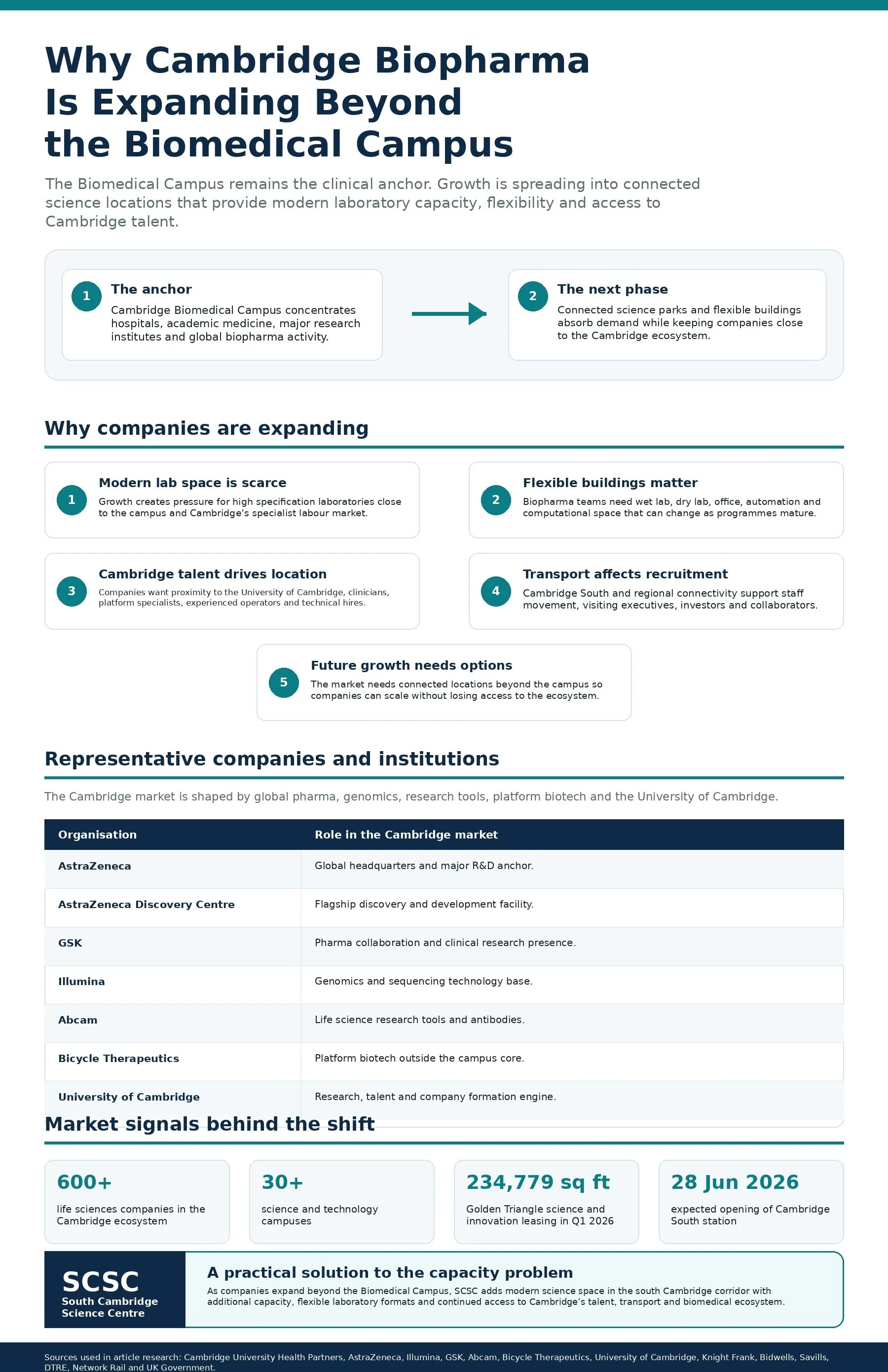
Infographic showing why Cambridge Biopharma is Expanding Beyond the Medical Campus


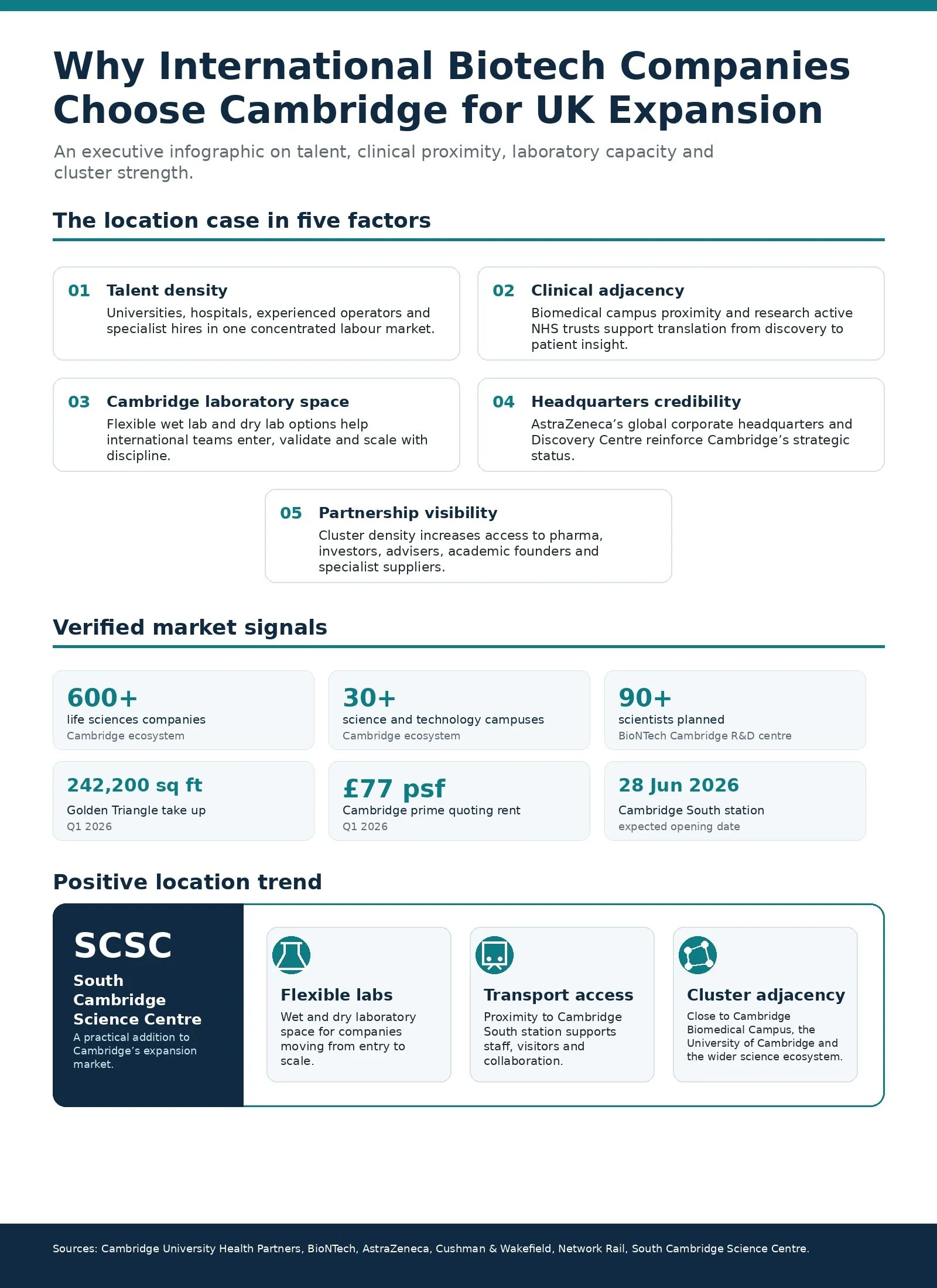
Why International Biotech Companies Choose Cambridge for Their UK Expansion Location

International biotech companies choosing a UK expansion location are making a decision about execution risk. The question is where a company can recruit faster, form credible research partnerships, access clinical insight, secure appropriate laboratory space and build relationships with investors and pharmaceutical companies. Cambridge remains one of the UK’s strongest answers because it combines scientific depth, clinical infrastructure, specialist property, global reputation and commercial networks in a compact geography.

The first reason is the concentration of life sciences capability. Cambridge University Health Partners reports that the local ecosystem includes six major academic institutions, more than 30 science and technology campuses, over 600 life sciences companies and three research active NHS Trusts. For overseas management teams assessing biotech expansion UK options, that density matters. It gives a new entrant immediate access to a mature market of researchers, clinicians, founders, service providers and technical talent rather than requiring the company to assemble those networks from the beginning.

The wider Cambridge business base strengthens that position. The University of Cambridge states that the Cambridge Cluster contains more than 4,500 knowledge intensive firms, employs more than 75,000 people and generates £25 billion in turnover. Those figures show that Cambridge is more than a university city with strong science. It is a functioning innovation economy with the supporting skills required to help companies move from discovery into growth.

For international biotech companies, this matters because expansion is rarely a single function decision. A company may begin with a research team, then need senior hires, intellectual property support, regulatory advice, finance leadership, clinical operations expertise and commercial partners. Cambridge gives management teams a deeper bench across those functions than most UK locations. That depth helps make a UK operation more than a small satellite office.

The presence of major pharmaceutical companies also gives Cambridge strategic credibility. AstraZeneca identifies Cambridge as the home of its global corporate headquarters and flagship research and development facility, The Discovery Centre. The company says its Cambridge base connects it with academic and industry networks, scientific talent and collaboration opportunities. For a board considering a UK biotech headquarters, that is an important signal. It demonstrates that Cambridge can support global leadership, not only early stage research.

BioNTech provides a more recent example of Cambridge’s international pull. In 2025, the German immunotherapy company announced plans for a Cambridge R&D centre focused on genomics, oncology, structural biology and regenerative medicine, with capacity for more than 90 highly skilled scientists. These are cutting edge disciplines that depend on advanced research capability and specialist recruitment. BioNTech’s decision illustrates why Cambridge remains attractive to companies working at the frontier of modern medicine.

Clinical proximity is another major driver. The Cambridge Biomedical Campus reported in 2025 that it contributes £4.7 billion annually to the UK economy. Its value to biotech companies lies in the combination of hospitals, research institutes, academic expertise and industry presence. Companies developing innovative products need clinical insight early, especially where trial design, biomarkers, patient stratification and translational evidence will influence investor confidence.

This is particularly relevant because clinical trials remain a competitive pressure point for the UK. The ABPI’s 2025 clinical trials report recorded a 35.7 percent increase in UK industry trial initiations in 2024, rising from 426 in 2023 to 578 in 2024. The same report also highlighted continuing weaknesses in patient recruitment and trial delivery. For international companies, this makes location choice more important. Strong research hospitals, experienced investigators and translational networks can improve the practical conditions for clinical development.

The national policy context is supportive, while still demanding. The UK Government’s Life Sciences Sector Plan states that pharmaceutical R&D accounted for 17 percent of all UK business R&D in 2023, the largest share of any product area. The plan also recognises that the UK is strong in discovery and weaker in commercialisation and adoption. Cambridge helps address that imbalance because it combines discovery science with company formation, clinical infrastructure, specialist investors and connections to pharmaceutical companies.

Cambridge laboratory space is therefore a strategic issue rather than a simple facilities requirement. Biotech companies need different types of space at different stages. A platform company may require a blend of wet lab, dry lab and computational space. A therapeutics company may need specialist utilities, containment, equipment routes and room to expand. A diagnostics or engineering biology company may need adaptable technical infrastructure as experiments move from proof of concept to repeatable development.

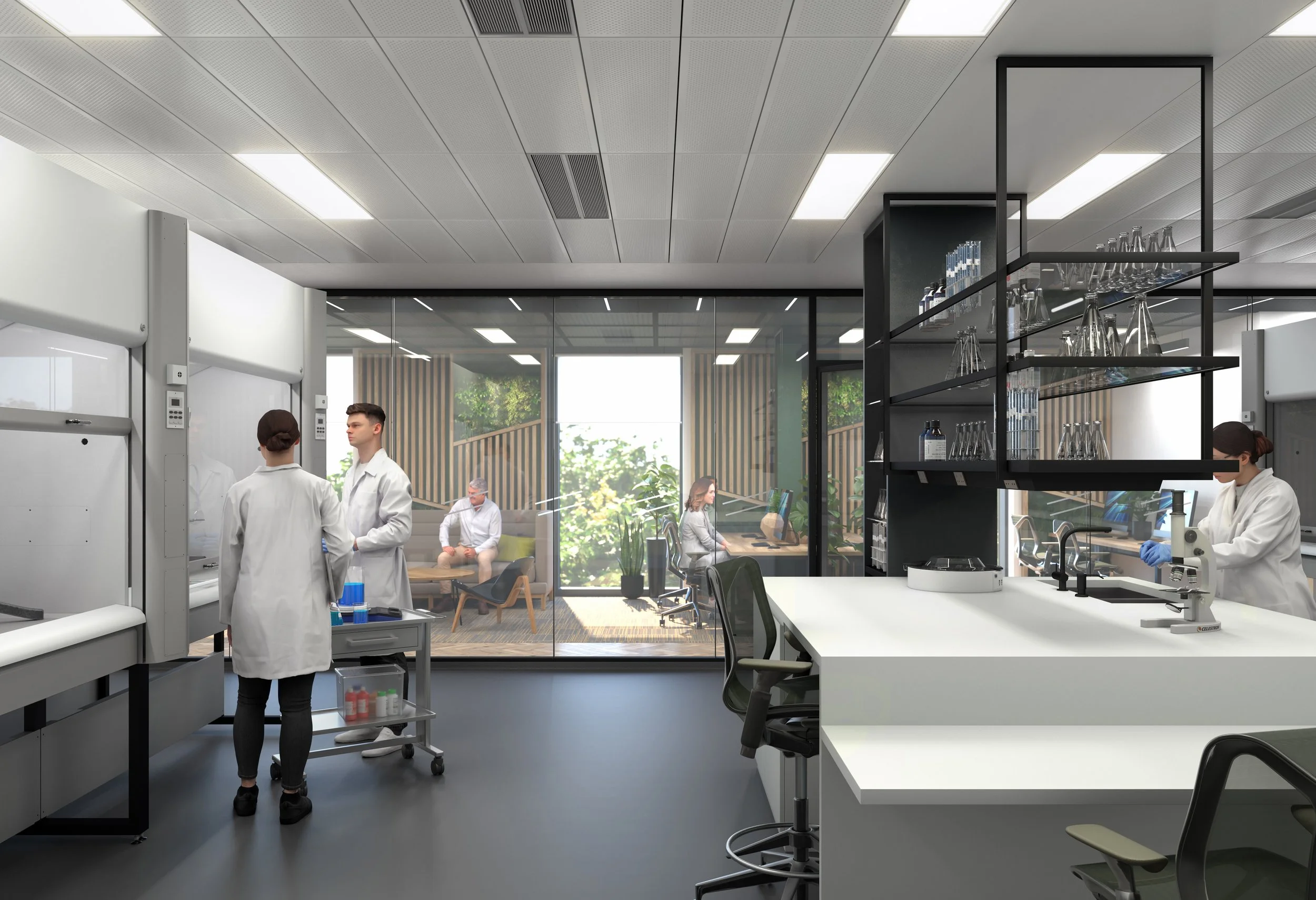
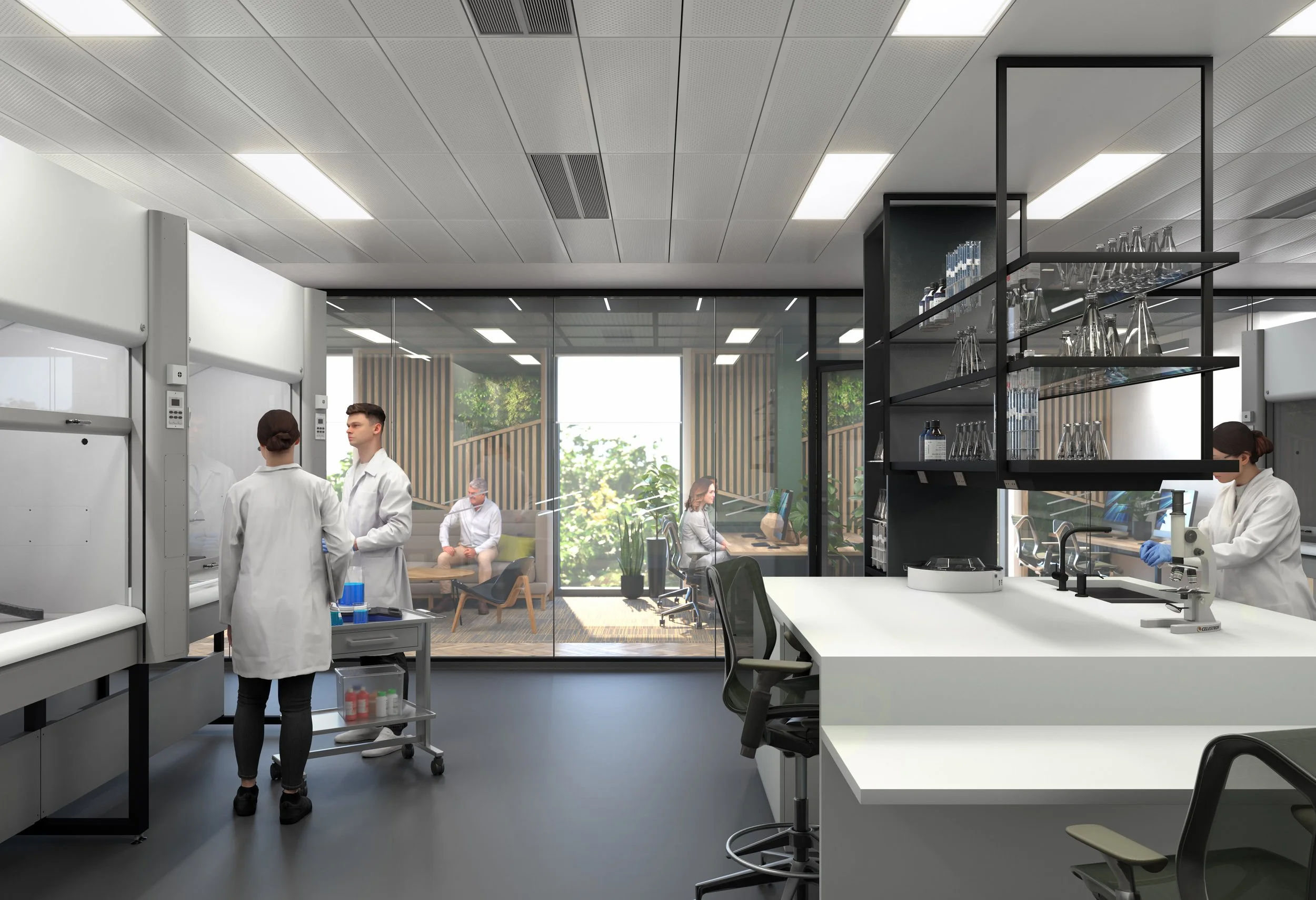
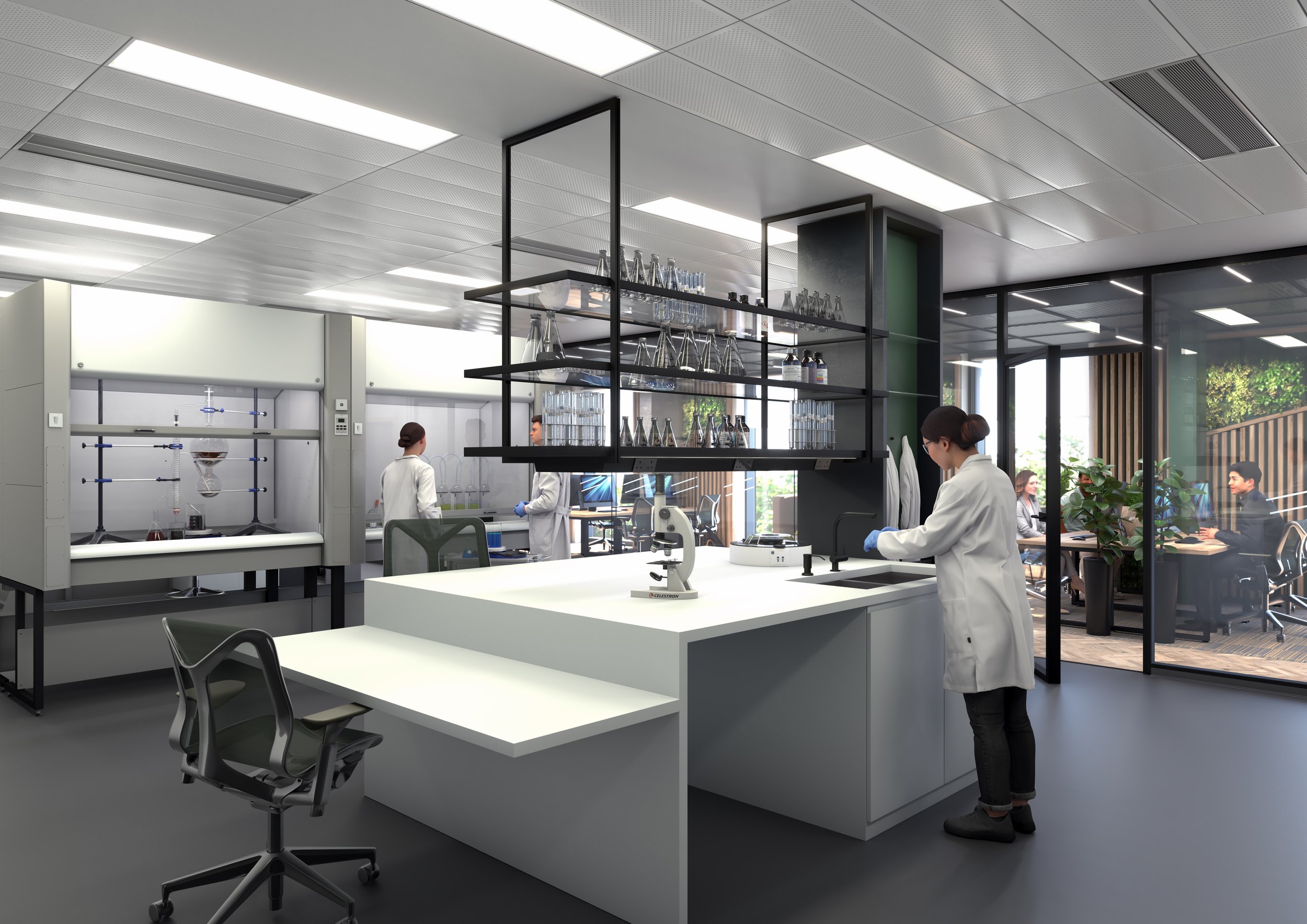
Lab Space in the South Cambridge Science centre

South Cambridge Science Centre

Independent market evidence shows continuing demand. Knight Frank reported that science and innovation leasing across the Golden Triangle reached 234,779 sq ft in the first quarter of 2026, which was 43.2 percent above the five year average and 6 percent ahead of the same period in 2025. This suggests that high quality laboratory and innovation space remains in demand despite a more selective financing environment. For companies entering Cambridge, securing the right premises at the right stage can influence capital efficiency as well as operational performance.

CBRE’s Cambridge life sciences market profile describes the city as one of Europe’s most advanced life sciences hubs, with real estate infrastructure that supports the innovation lifecycle from discovery through translation and commercialisation. That breadth is important. International companies are not looking only for a building. They are looking for a place where research, clinical development, hiring and commercial engagement can happen within the same operating environment.

Transport is becoming a more visible part of that equation. Network Rail says Cambridge South station is expected to open to the public on 28 June 2026 and will improve connectivity to the biomedical campus and the wider region. For international biotech companies, this has practical value. Easier movement supports recruitment, site visits, investor meetings, hospital access and collaboration between teams.

South Cambridge Science Centre fits into this wider pattern as part of the market’s response to demand for additional specialist space around the southern Cambridge corridor. This article does not rely on SCSC website material. The relevant independent evidence is market based. Savills identified Frontier IP’s 18,000 sq ft acquisition at South Cambridge Science Centre as the largest laboratory letting in Cambridge during the first half of 2025. Savills also noted that the space would support incubation activity for Frontier’s portfolio companies.

The Frontier IP transaction is significant because it links property demand with company formation. Frontier IP announced a strategic partnership to create a Cambridge innovation hub and stated that it expected portfolio companies and other early stage businesses to use the facility. For the wider Cambridge science park market, this is a positive signal. It shows that specialist locations are being used to support deep technology and life sciences businesses, rather than simply absorbing surplus office demand.

The southern Cambridge corridor benefits from this type of additional capacity. Companies that want proximity to the biomedical campus, access to Cambridge South connectivity and room to scale need credible options beyond the most constrained central locations. SCSC is relevant because it adds choice to the market in a location that can support laboratory users, commercialisation teams and growth stage occupiers. The point is measured but important: Cambridge’s appeal improves when the city can offer more than one route into the ecosystem.

For international biotech companies, Cambridge also offers reputational compounding. Each major company, university spinout, clinical research group, investor backed platform and specialist science location reinforces the decision case for the next entrant. That cumulative effect is difficult for emerging clusters to copy. It allows new arrivals to operate in a market where counterparties already understand life sciences risk, financing cycles, translational research and the requirements of regulated innovation.

The conclusion is clear. Cambridge attracts international biotech companies because it reduces multiple expansion risks at once. It offers talent, clinical infrastructure, pharmaceutical partners, investors, research excellence, specialist property and improving transport links. For boards considering biotech expansion UK strategy, Cambridge is more than a prestigious postcode. It is a practical environment for turning scientific ambition into clinical trials, partnerships and innovative products.Savills reported that Frontier IP’s 18,000 sq ft deal at South Cambridge Science Centre was Cambridge’s biggest laboratory lease in the first half of 2025.

Why International Biotech Companies Choose Cambridge For UK Expansion - Infographic

What Biotech Investors Look for in a Science Park

What separates a science park that simply provides laboratory space from one that materially improves the investment case for biotech companies?

For biotech investors, the answer is increasingly clear. A science park is not assessed only as a property asset. It is assessed as part of the value creation infrastructure around a company. The right environment can reduce scientific execution risk, hiring risk, capital inefficiency, regulatory uncertainty, translational delay and exit risk. In the life sciences sector, where companies can spend years progressing from discovery to clinical validation, the quality of the location can influence whether promising research and development becomes investable evidence.

This is why investors now look beyond prestige, building design and postcode. A strong UK science park must help companies reach value inflection points faster, preserve capital for science and create the conditions in which technical progress can become commercial value. In a more selective funding market, that distinction matters.

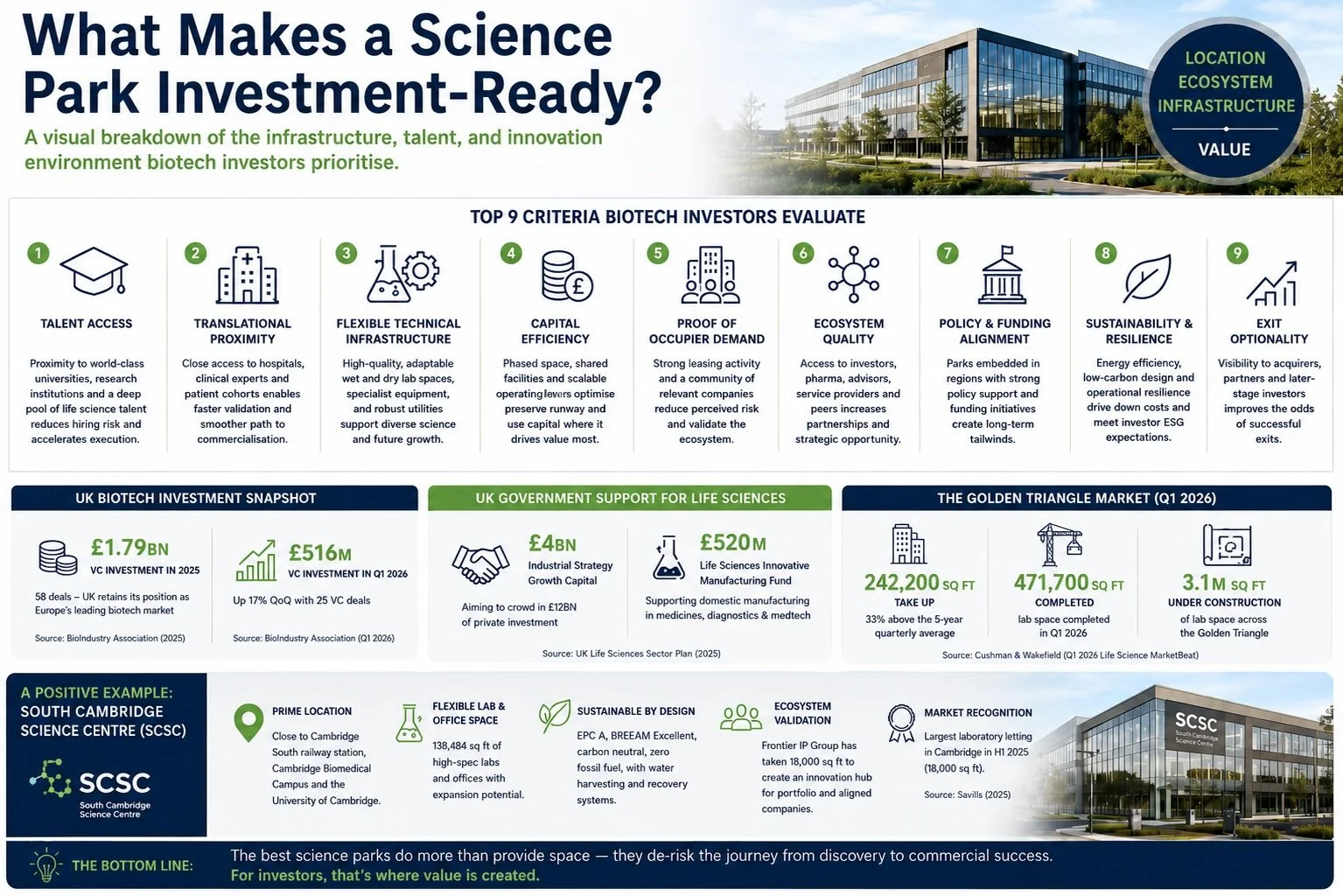
The investment context is important. UK biotech raised £1.79 billion of venture capital across 58 deals in 2025, according to the BioIndustry Association. The UK retained its position as Europe’s leading national biotech market, representing 30 percent of European venture financing. The same report described 2025 as one of the most selective investment climates in a decade. In Q1 2026, the BIA reported £552 million of total equity financing for UK biotech, with venture capital rising 17 percent quarter on quarter to £516 million and deal activity increasing to 25 VC transactions. These figures show that capital remains available, but investors are demanding greater discipline, stronger evidence and clearer routes to scale.

The first factor investors assess is talent access. Biotech companies are often talent constrained before they are space constrained. Investors therefore look for science parks close to universities, hospitals, data science teams, experienced founders, technical operators, regulatory advisers and repeat executives. Hiring for translational biology, medicinal chemistry, bioinformatics, clinical operations, quality systems, genetic engineering and platform technology is highly competitive. A park that gives companies access to this talent pool can reduce recruitment friction and improve execution speed.

Cambridge illustrates this point clearly. Cambridge University Health Partners identifies the city as having six world class academic institutions, more than 30 science and technology campuses, more than 600 life sciences companies and three leading research active NHS Trusts. The University of Cambridge reports more than 4,700 knowledge intensive firms, more than 75,000 people employed by those firms and £25 billion in annual turnover generated by knowledge intensive companies in the city region. For investors, these numbers indicate more than regional strength. They point to a dense operating environment where specialist expertise, clinical insight and commercial experience are concentrated.

The second factor is translational proximity. Investors want to know that a company can move from discovery science to validated programme without losing time in fragmented networks. This is particularly important for companies working in human health, where patient biology, clinical relevance, diagnostics, biomarkers and trial design can determine whether a programme survives due diligence. A strong science park gives companies access to clinicians, patient cohorts, hospital systems, contract research partners, diagnostics specialists and senior scientific advisers. A park outside a serious biomedical ecosystem may offer attractive rent, but it may not provide the clinical adjacency that improves a company’s probability of success.

The third factor is state of the art technical infrastructure. Biotech is no longer a single category with one standard space requirement. AI enabled drug discovery companies may need more computational infrastructure and less wet lab space. Cell therapy companies may need specialist containment, cold chain capability, clean room pathways and resilient utilities. Synthetic biology and genetic engineering companies may require carefully configured laboratories, extraction, gases, waste handling and advanced equipment access. Companies working on food production may need biological testing capacity, fermentation capability or pilot scale development environments. Investors therefore favour science parks that can support multiple operating models rather than forcing companies into rigid space formats.

JLL’s 2025 life sciences real estate analysis stated that AI native biotechs now account for one sixth of all biotech venture capital deals. It also reported that those companies lease roughly one third less space per employee than traditional biotechs and show a lower lab to office ratio of 45 to 55. For investors, this is a crucial signal. The strongest parks are those that can accommodate wet lab science, dry lab work, data intensive discovery, automation and future expansion without creating unnecessary capital burden.

The fourth factor is capital efficiency. In a selective market, every lease decision affects runway. Investors will scrutinise whether a company is committing to too much space too early, paying for unnecessary fit out or accepting inflexible obligations before its science has been de risked. A strong UK science park offers phased growth, adaptable laboratories, shared equipment options, practical expansion routes and reduced relocation risk. Real estate may not be the central investment thesis, but poor real estate decisions can damage that thesis by diverting capital away from experiments, talent, intellectual property and clinical progress.

The fifth factor is proof of occupier demand. Investors look for evidence that a park is attracting relevant companies rather than simply marketing itself as a life sciences location. Leasing data can provide that signal. Cushman & Wakefield reported that Golden Triangle take up reached 242,200 sq ft in Q1 2026, 33 percent above the five year quarterly average. It also reported prime quoting rents of £77 per sq ft in Cambridge, £70 per sq ft in Oxford and £140 per sq ft in London. In the same quarter, 471,700 sq ft of lab space completed across the Golden Triangle, with a further 3.1 million sq ft under construction. These figures show why investors must distinguish genuine cluster strength from undifferentiated laboratory supply.

The sixth factor is ecosystem quality. Biotech investors favour parks where companies can meet venture funds, pharma scouts, corporate partners, patent advisers, grant specialists, technical consultants and experienced board members within the same regional network. The best ecosystems increase the surface area for strategic partnerships and reduce the founder’s dependence on cold outreach. They also help companies learn from peers facing similar technical, regulatory and commercial milestones.

South Cambridge Science Centre is a positive example of this broader shift. The centre describes itself as a 138,484 sq ft gross internal area science park with laboratories and offices, designed around sustainability, flexibility and energy efficiency. It is located close to Cambridge South railway station, the Cambridge Biomedical Campus and the University of Cambridge. That combination of laboratory provision, transport connectivity and cluster adjacency aligns with what investors increasingly want from scale up infrastructure.

The centre has also gained market validation through occupier activity. In June 2025, Frontier IP announced a strategic partnership with Abstract Mid Tech to create an innovation hub at South Cambridge Science Centre, taking a 20 year lease for start up and early stage science and technology companies. Frontier IP said it intends to sublet space to portfolio companies and other innovative businesses aligned with deep technology and life sciences. Savills later identified Frontier’s 18,000 sq ft acquisition at South Cambridge Science Centre as the largest laboratory letting in Cambridge during the first half of 2025. For investors, this is the type of signal that matters because it connects real estate with commercialisation capacity.

The seventh factor is policy and funding alignment. Biotech investors prefer parks located in regions supported by national strategy, infrastructure investment and specialist funding programmes. The UK Government’s Life Sciences Sector Plan recognises that emerging life sciences firms can struggle to raise capital, particularly at Series B and later stages. It sets out British Business Bank commitments including an additional £4 billion of Industrial Strategy Growth Capital intended to crowd in £12 billion of private sector capital. It also confirms the £520 million Life Sciences Innovative Manufacturing Fund, designed to support domestic manufacturing capacity in medicines, diagnostics and medtech. Policy support does not replace company level diligence, but it can strengthen the long term attractiveness of a cluster.

The eighth factor is sustainability and operational resilience. Life sciences buildings are resource intensive, so investors increasingly assess energy performance, grid resilience, carbon reporting, water use and continuity planning. Sustainability is not a reputational extra. It affects operating cost, institutional investor reporting, occupier procurement and future proofing. Parks with credible sustainability credentials and resilient infrastructure are better positioned to support companies as they scale.

The ninth factor is exit optionality. Investors want to know whether companies in a park are visible to acquirers, pharma partners, later stage funds and strategic collaborators. In biotech, liquidity can come through M&A, licensing, platform partnerships or public markets. Since IPO markets have remained constrained, strategic visibility has become more important. The BIA noted that Q1 2026 had no UK biotech IPOs and that IPO inactivity has persisted since 2022. That reinforces the importance of ecosystems that connect companies to private capital, strategic partners and potential acquirers.

The conclusion is straightforward. Biotech investors look for science parks that behave like value creation platforms. The strongest parks combine talent density, clinical adjacency, state of the art infrastructure, capital efficient occupancy, credible occupier demand, commercial networks, policy alignment, sustainability and exit visibility. A science park that merely provides laboratory space is exposed in a selective market. A science park that helps companies turn promising science into investable evidence becomes part of the investment case itself.

Infographic explaing what makes a science park investment ready

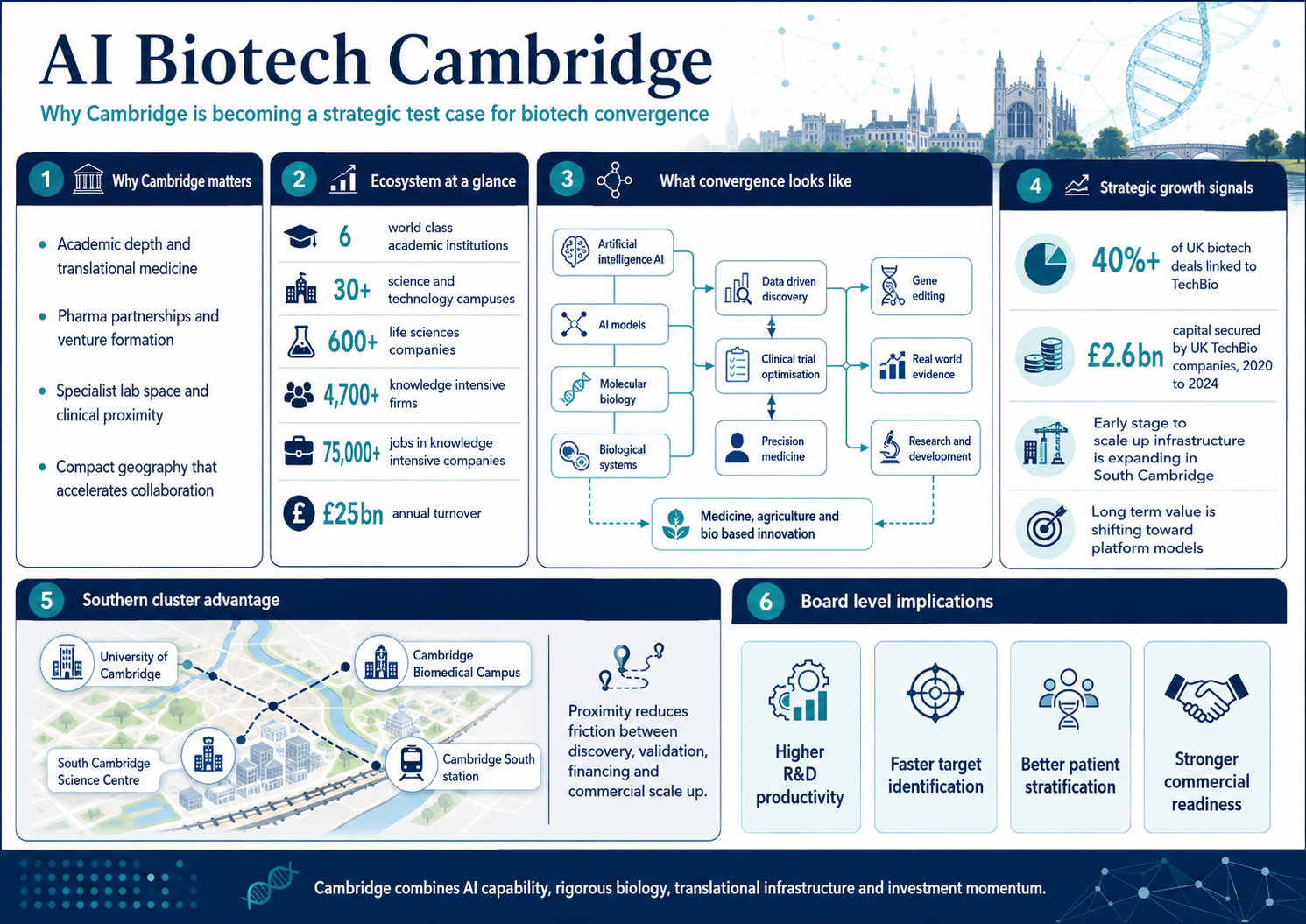
AI Biotech Cambridge: a Strategic Test Case for Biotech Convergence

Cambridge has moved beyond its historic position as a strong life sciences cluster. It is now becoming a strategic test case for the convergence of artificial intelligence AI, biotechnology and translational research. For C suite leaders, the importance is not only scientific. It is commercial, operational and competitive.

The city combines academic depth, pharma partnerships, clinical proximity, venture formation, specialist real estate and research and development capability in a compact geography. That combination is increasingly valuable as biotech technology trends move from wet lab discovery alone toward computational biology, molecular biology, multimodal data, automated experimental design and AI models that can interrogate complex biological systems.

The UK Government’s Life Sciences Sector Plan, published in 2025, sets a national ambition for the UK to become Europe’s leading life sciences economy by 2030 and the third globally by 2035. The plan also identifies TechBio, the fusion of biotechnology with data science, as a priority growth area and commits more than £2 billion of government funding over the Spending Review period alongside UKRI and NIHR support.

Cambridge is unusually well positioned to capture that agenda. Cambridge University Health Partners describes the local ecosystem as including six world class academic institutions, more than 30 science and technology campuses and more than 600 life sciences companies including AstraZeneca, GSK, Abcam and Illumina. The University of Cambridge’s 2025 innovation data reports more than 4,700 knowledge intensive firms, more than 75,000 people employed by those firms and £25 billion in annual turnover generated by knowledge intensive companies in the Cambridge city region.

The rise of AI biotech Cambridge is therefore not an isolated technology story. It is the next phase of a cluster model that already has scale, density and institutional connectivity. CBRE’s 2025 Cambridge market profile describes the city as one of Europe’s most advanced life sciences hubs, with end-to-end capability from discovery to translation and commercialisation. It also notes that life sciences activity is concentrated mainly in the southern cluster while technology is more prevalent in the north and city centre. That geography matters because convergence depends on proximity between data science, biology, clinical assets, capital and specialist infrastructure.

For executives, the first board level implication is productivity. Traditional drug discovery remains expensive, slow and exposed to high attrition. AI does not remove biological risk, but it can improve target identification, molecule design, patient stratification, clinical trial prioritisation and real-world evidence generation. The strategic value is not simply speed. It is the ability to make better decisions earlier, reduce unproductive programmes and strengthen the evidence base behind precision medicine.

The capital market already reflects that shift. The UK BioIndustry Association reported in 2025 that TechBio, defined as the combination of data, AI and biotechnology, has moved into the mainstream and accounted for more than 40 percent of UK biotech deals in recent years. It also reported more than £2.6 billion of capital secured by UK TechBio companies between 2020 and 2024.

Major transactions reinforce the point. The BIA highlighted the £489.6 million acquisition of Exscientia by Recursion as evidence that UK science is creating global value through TechBio. More recently, Isomorphic Labs has attracted substantial funding momentum for its AI powered drug discovery work, with recent reporting putting its latest raise at $2.1 billion. For boards assessing AI drug discovery UK strategy, these are not speculative signals. They show that investors are underwriting platform models and data driven discovery engines, not only single therapeutic assets.

Cambridge is already producing relevant company formation. CardiaTec Biosciences, a University of Cambridge linked company, uses AI to identify new cardiovascular treatments. Cambridge Enterprise states that CardiaTec integrates genetics, gene expression, epigenetics and proteomics to understand disease mechanisms. Its work shows how Cambridge biotech innovation is increasingly interdisciplinary by design, combining computational capability with molecular biology and disease specific knowledge.

The city’s translational infrastructure is equally important. The Milner Therapeutics Institute’s Bio Incubator offers access to serviced laboratory equipment and potential interaction with clinicians, researchers and drug discovery scientists on the Cambridge Biomedical Campus. For early-stage Cambridge science companies, that can reduce the friction between academic discovery, validation, pharma engagement and investor readiness.

South Cambridge Science Centre should be viewed in that context. Its importance is not only real estate provision. It is an ecosystem development story. SCSC is emerging as an affordable platform for early stage and scale up companies that need wet lab capability, dry lab flexibility, commercial proximity and cost discipline. That specification fits the hybrid operating model now common in AI enabled biotechnology, where computational teams, biology teams, automation workflows and translational science must operate in close sequence rather than in separate silos.

A key validation point is the arrival of Frontier IP Group plc, the intellectual property commercialisation specialist. In June 2025, Frontier IP announced a strategic partnership with Abstract Mid Tech Limited to create an innovation hub at South Cambridge Science Centre. Under the agreement, Frontier IP is taking a 20 year lease on approximately 18,000 sq ft at SCSC and intends to sublet space to portfolio companies and other innovative companies aligned with its focus on deep technology and life sciences.

For C suite leaders and investors evaluating Cambridge biotech innovation, the strategic importance is clear. It is bringing a commercialisation engine into the building. That creates a more useful operating environment for founders than conventional accommodation alone. Early-stage occupiers should benefit from closer access to commercialisation expertise, investor engagement, corporate partner visibility and peer company interaction.

The wider market has recognised the transaction. Savills identified Frontier’s 18,000 sq ft commitment at South Cambridge Science Centre as the largest laboratory letting in Cambridge during the first half of 2025 and noted that the space will provide incubation capacity for Frontier’s portfolio companies. That matters because it demonstrates institutional demand for high specification space in the southern Cambridge cluster and shows that SCSC is being adopted by organisations with a direct interest in deep tech and life sciences company creation.

The surrounding ecosystem strengthens the proposition. SCSC is located in Sawston, south of Cambridge and close to the Cambridge Biomedical Campus, the University of Cambridge and emerging transport infrastructure around Cambridge South station. Network Rail says Cambridge South station is expected to open to the public on 28 June 2026 and will provide connectivity to the biomedical campus and the wider region. For occupiers, that matters because talent acquisition, clinical collaboration and investor access are affected by transport efficiency as much as by laboratory specification.

This is why SCSC is a positive addition to the AI biotech Cambridge landscape. The convergence of AI and biotechnology does not happen through software capability alone. It requires physical infrastructure, repeatable experimental validation and a community of companies moving through similar technical and commercial inflection points. With Frontier IP’s innovation hub embedded in the centre, SCSC has the potential to operate as a concentration point for the next generation of AI drug discovery UK, diagnostics, engineering biology, gene editing and platform technology companies.

The strategic opportunity extends beyond medicine. The same convergence logic will influence medicine agriculture and bio-based manufacturing, where biological systems, automation and AI models can support new approaches to materials, food production, crop resilience and industrial biotechnology. Cambridge’s advantage is that its research base can support both therapeutic innovation and broader bioeconomy applications without treating them as disconnected markets.

South Cambridge Science Centre

The competitive picture still requires discipline. The challenges including biological validation, data quality, regulatory confidence, reimbursement, talent access and capital intensity remain substantial. A weak AI model can create false confidence. Poor experimental design can waste capital. A company without proprietary data, clinical relevance or credible translation pathways can look technically sophisticated while remaining commercially fragile.

The AstraZeneca investment story shows why this matters at board level. In September 2025, AstraZeneca paused a planned £200 million Cambridge expansion, which was widely interpreted as a warning signal for UK pharmaceutical competitiveness. More recent reporting says the company has since revived UK investment plans, including Cambridge, as part of a £300 million package. The lesson is not that Cambridge is fragile. The lesson is that innovation clusters win over the long term only when science, infrastructure, market access, capital and policy remain aligned.

Competition from the United States remains relevant. US capital depth, large pharma demand, reimbursement scale and specialist AI infrastructure continue to influence where companies build, finance and commercialise. Cambridge’s response should not be to imitate the United States, but to convert its own advantages into operating leverage: strong biology, clinical adjacency, trusted data access, founder support, specialist real estate and translational speed.

The executive conclusion is clear. Cambridge’s advantage in AI and biotech convergence is structural, not cosmetic. The city combines research excellence, clinical proximity, specialised infrastructure, pharma connectivity and a growing TechBio investment market. The opportunity for boards is to treat Cambridge not only as a location choice, but as an operating system for accelerated discovery and translation.

The companies that benefit most will be those that pair AI capability with rigorous biology, secure proprietary data, credible clinical pathways and disciplined capital allocation. In that context, Cambridge and assets such as South Cambridge Science Centre are well placed to support the next cycle of biotech technology trends, from AI assisted discovery and data rich translational medicine to precision medicine and commercially scalable platform biology.

AI Biotech Cambridge Inforgraphic

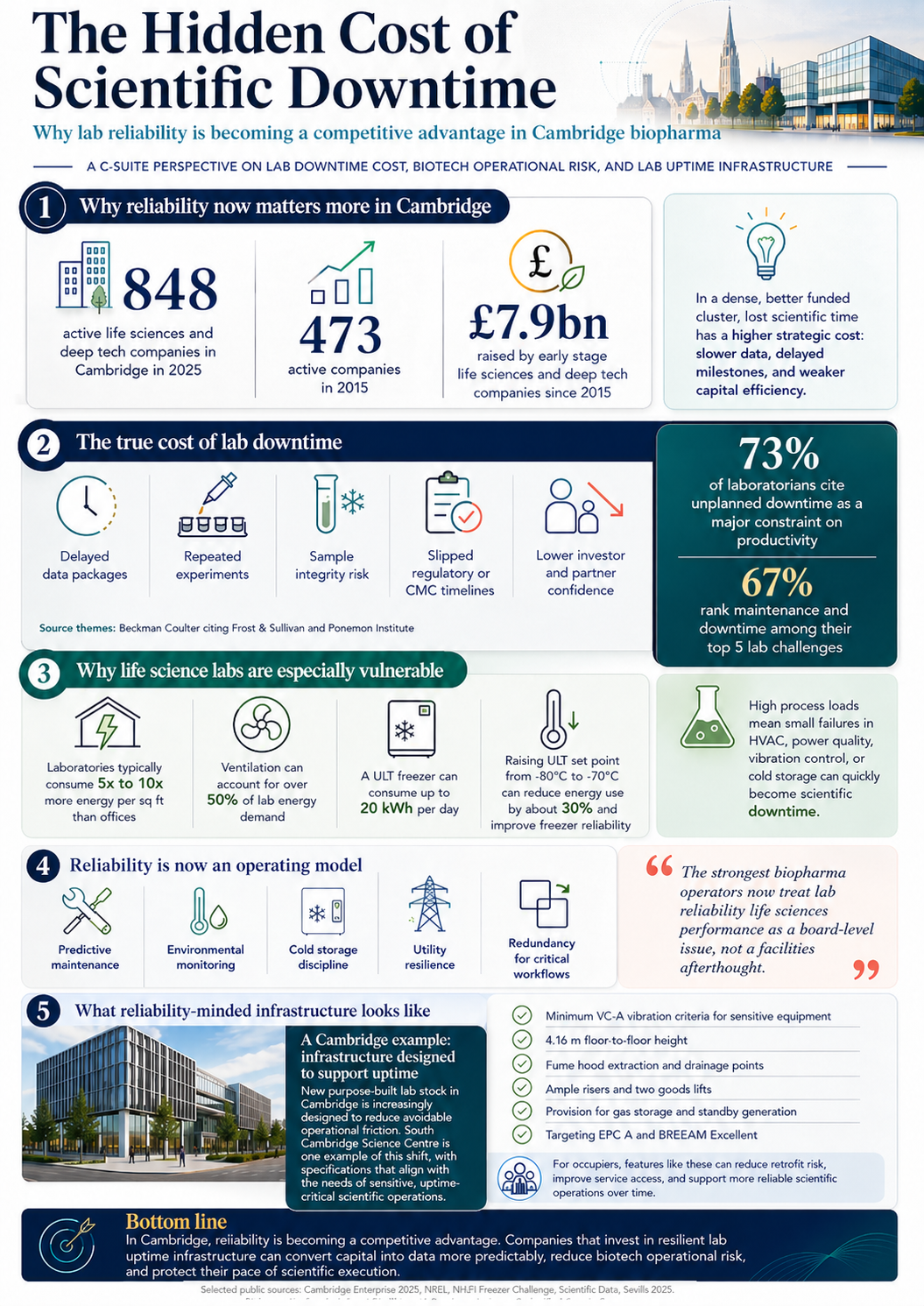
The Hidden Cost of Scientific Downtime: Why Lab Reliability Is the New Competitive Advantage in Cambridge

In Cambridge, scientific downtime is no longer a back-office issue. It is a strategic variable. The region’s life sciences and deep tech ecosystem has grown from 473 active companies in 2015 to 848 in 2025, and those early-stage companies have raised £7.9 billion since 2015. Cambridge also attracted £2.49 million of life sciences investment per company in 2024, more than double Oxfordshire and more than 2.5 times Greater London. In a cluster with that level of capital intensity and programme density, lost scientific time has a different meaning than it did a decade ago. It is not just an operational nuisance. It directly affects burn, milestones, partner confidence and the ability to convert funding into data.

That is why the real lab downtime cost is often misunderstood. Most companies still record downtime as an engineering incident: a freezer alarm, a failed autoclave cycle, an analyser fault, a BMS issue, a ventilation deviation, a calibration drift. But the economic damage usually appears elsewhere. It appears in delayed assay release, repeated experiments, sample integrity concerns, postponed IND or CTA support packages, and slower internal decision making. In clinical laboratory settings, published estimates illustrate how large these secondary effects can become. Beckman Coulter, citing Frost and Sullivan and the Ponemon Institute, reports that 73 percent of laboratorians identified unplanned downtime as a leading constraint on productivity, 67 percent ranked instrument maintenance and downtime among their top five challenges, and healthcare organisations faced an average cost of $740,357 per downtime incident. Those are clinical rather than biotech figures, but the directional lesson is clear: when high value lab operations stop, the visible repair cost is usually the smallest part of the financial impact.

Cambridge magnifies that effect because the cluster runs on compressed timelines. CBRE describes Cambridge as one of Europe’s most advanced life sciences hubs, with end-to-end capabilities across discovery, translation and commercialisation. Bidwells’ February 2026 market databook says Cambridge’s office market had its strongest year since 2021, while science and technology occupiers continued to drive demand, with advanced research and AI exerting increasing influence. In that context, the firms that keep programmes moving through infrastructure disruptions are not merely better managed. They are more competitive. Reliability is becoming a differentiator in the same way location, talent density and capital access already are.

The reason is simple. Modern biotech research is more infrastructure sensitive than many executives assume. Flow cytometry, automated liquid handling, mass spectrometry, cell culture, cryogenic storage, imaging, sequencing support labs and GMP adjacent analytical environments all depend on stable utilities and tightly controlled environments. Even when a room is technically “available,” the science may not be reliable if temperature, vibration, humidity, power quality or air handling drift outside a workable range. A National Renewable Energy Laboratory guide notes that laboratories typically consume five to ten times more energy per square foot than offices, and NREL’s later Smart Labs work puts the average lab at around four times the site energy intensity of a typical office. That matters because any building type operating at those loads has less tolerance for weak HVAC control, underpowered backup strategy or poorly planned service access.

This is where lab uptime infrastructure starts to look less like a property issue and more like a scientific one. NREL’s 2024 Smart Labs material notes that laboratories can consume three to ten times more energy than similarly sized commercial buildings and that about 50 percent of lab energy may be wasted through inefficient fume hood operation and ventilation systems. Older constant air volume systems are particularly vulnerable because they force buildings to work harder than necessary while still giving occupiers less control over actual operating conditions. In practice, that translates into higher opex, more stress on plant, and greater exposure to downtime when systems are poorly tuned or overloaded. For fast moving life sciences companies, a building that routinely runs close to its service limits is not just inefficient. It introduces avoidable biotech operational risk.

Cold storage is one of the clearest examples of hidden downtime risk because the damage accumulates quietly. A 2023 Scientific Data paper presented a labelled dataset from 53 ultra-low temperature freezers with operating histories spanning up to 10 years and 46 service report fault events. The paper notes that ULT freezers can consume up to 20 kWh per day and argues for data driven fault detection and diagnostics to maintain reliable operation. NIH makes the same point from an operational angle. Its January 2024 sustainability bulletin says conventional ULT freezers use around 20 kWh daily, roughly equivalent to an average U.S. household, and its 2024 Freezer Challenge results show 110 participants collectively saved 1,454,602 kWh per year, $171,100 per year and 1,072.8 metric tons of CO2e while improving freezer reliability. NIH also states that increasing a ULT freezer set point from minus 80°C to minus 70°C can cut energy use by around 30 percent and improve compressor reliability. Those are energy figures, but the larger implication is reliability: badly managed cold storage is not just expensive, it is a latent sample loss risk.

Reliability risk is not confined to storage. Instrument downtime itself is becoming more measurable and, increasingly, more predictable. A 2025 Lab Medicine study used data from three identical chemistry analysers, recorded 650 downtime events and built a logistic regression model that predicted downtime with 69.2 percent sensitivity and 58.2 percent specificity. The significance of that result is not that it solves maintenance. It is that it shows downtime can be treated as an analytically manageable variable rather than a random inconvenience. For board level decision making, that is an important shift. Once downtime is measurable, it can be incorporated into capital planning, site selection and operating model design.

The consequences become especially acute during the scale up phase. Cambridge’s own market data shows why. Savills reported that by mid 2025 the city had 604,000 sq ft of available laboratory space and that new completions, including The Press and South Cambridge Science Centre, added 203,000 sq ft of purpose-built laboratory enabled stock. Yet the same report recorded 705,000 sq ft of active requirements. Bidwells similarly reported that new completions pushed availability up to 13.2 percent in 2025, even as startups remained cautious and the market continued to be driven by science-based demand. In other words, more space has arrived, but the pressure has not gone away. In that environment, the quality of space matters as much as the existence of space. Companies choosing between technically resilient stock and superficially available stock are making a competitive decision whether they frame it that way or not.

This is also why lab reliability life sciences companies pursue is increasingly linked to the base building, not just the fit out. Knight Frank’s UK lab guidance highlights the importance of slab heights, air change assumptions, fume hood capacity, locations for chillers and backup generators, loading bays and goods lifts. Those are not fringe details. They determine whether a lab can absorb change without destabilising ongoing science. The same guide points out that laboratories demand far more cooling, ventilation and servicing intensity than offices, which is precisely why retrofits so often introduce hidden reliability constraints later. If the building does not have technical headroom, uptime becomes fragile no matter how good the science team is.

Seen through that lens, newer purpose-built stock in Cambridge becomes relevant not because it is newer, but because it is engineered to remove common sources of interruption. South Cambridge Science Centre is a good example of this trend. Its published specification includes minimum VC A vibration criteria for sensitive equipment, 4.16 metre clear height to underside of slab, fume hood extraction, drainage points, ample risers, two goods lifts, and provision for gas storage and standby generation. The scheme also targets EPC A and BREEAM Excellent and is described by the developer as zero fossil fuel and fully electric. For occupiers, those are the kinds of quiet technical characteristics that can improve service access, reduce retrofit stress, support stable equipment operation and lower the probability that the building itself becomes the cause of scientific interruption. That does not eliminate hypothetical downtime, but it does reduce structural sources of downtime, which is exactly the point.

The competitive advantage comes from recognising that reliability is cumulative. No single intervention solves the problem. What matters is whether an organisation builds a system in which freezer management, preventative maintenance, environmental monitoring, backup planning, instrument redundancy, utilities resilience and site selection reinforce one another. The most capable operators increasingly treat reliability as a cross functional discipline. Facilities, lab operations, EHS, QA, IT and programme leadership all have a stake because each relies on uninterrupted output from the others. That is why the most sophisticated labs are moving away from reactive “service call” thinking and toward resilience planning based on predictive maintenance, data visibility and infrastructure headroom.

This has implications for capital allocation as well. Companies often see reliability investments as defensive spending. In Cambridge they should increasingly be viewed as speed investments. If a business can avoid repeating a six week experiment, preserve a full freezer inventory, maintain GMP support analytics without interruption, or prevent a systems failure from delaying a financing milestone, the return is not abstract. It shows up in time, credibility and optionality. That is especially true in a region where international investors are now involved in nearly 40 percent of deals and where the ecosystem’s investment intensity has risen sharply over the past decade. In that environment, firms that repeatedly lose time to infrastructure instability become harder to underwrite.

The hidden cost of scientific downtime, then, is that it rarely appears on one obvious line in the budget. It is spread across burn, staffing, rework, lost samples, delayed milestones and weakened confidence in the operating model. Cambridge’s next tier of winners is likely to include not just the companies with the strongest platforms, but the ones that understand uptime as part of platform quality. In a cluster as capital rich and technically demanding as Cambridge, reliability is no longer the background condition for doing science. It is increasingly one of the ways serious companies outperform.


Why Most Biotech Startups Outgrow Their First Lab Too Early And How to Avoid It

A persistent misconception in biotech is that a first laboratory fails because the company succeeds too quickly. In practice, the opposite is often closer to the truth: many first labs are chosen for speed, affordability and immediate proof of concept, then asked to support a very different operating model within 18 to 36 months. The available evidence from incubator markets points in that direction. CBRE’s 2025 U.S. Life Sciences Incubator Survey found that most startups stay in incubator facilities for at least two years, while more than 60% of respondents said over half of their startups graduate from incubator status, and 83% said they actively help those companies secure their next lab or office. LabCentral’s latest impact data points to the same pattern at scale: since 2013 it has supported 278 companies that created 6,339 jobs, raised $18.4 billion, launched 132 clinical trials and occupied a network that now exceeds 243,000 sq ft. That is not a picture of companies finding a permanent first home. It is a picture of first labs acting as launchpads.

Cambridge intensifies that pattern because it compresses science, capital and property pressure into a single geography. Cambridge Enterprise reported in 2025 that the region’s active life sciences and deep tech company base had grown from 473 companies in 2015 to 848 in 2025, and that those early-stage companies had raised £7.9 billion since 2015. Savills, meanwhile, reported that take up across Cambridge reached 273,000 sq ft by the end of the first half of 2025, 33% above the five year average, with 705,000 sq ft of active requirements still in the market. In other words, more companies are being created, more capital is pursuing them, and more space is needed at the exact point when many founders discover that their first lab was sized for a seed story rather than a scaling business.

One reason this happens is that first labs are often procured under an incorrect optimisation logic. The initial brief is often to get into compliant wet lab space as fast as possible, close to talent and investors, with minimal upfront capital. Savills noted that the fitted flexible lab segment in the UK has been leasing quickly at sizes around 500 to 1,200 sq ft, which tells its own story about how small many entry level lab decisions are. That makes sense for a founding team with a narrow experimental plan, but it leaves little margin when assay complexity expands, sample storage multiplies, equipment arrives in waves, and the company needs write up, QA, data and operations functions that were not part of the original footprint. The result is not simply that the company grows. It is that the nature of the work changes faster than the space assumption.

The core biotech lab growth challenges are therefore usually infrastructural before they are numerical. Headcount matters, but bench density is only one variable. The real pressure points are utilities, environmental control, storage, contamination management, equipment adjacencies and the ability to segregate workflows. That is why purpose-built lab specifications look very different from standard commercial buildings. Knight Frank’s technical guidance notes that slab to slab height below 4.00m, commonly 3.75m in conventional offices, is already tight for lab conversion. The same source states that lab cooling loads are typically two to three times those allowed for in offices, and that laboratory buildings consume three to five times the energy of a standard office, with over 60% of that energy used in ventilation. It also points to a typical laboratory slab to slab design range of 4,200 to 4,500 mm and a typical ventilation requirement starting at a minimum of 6 air changes per hour, often rising well above that depending on use. A startup can appear to outgrow a lab “too early” simply because those technical thresholds were not embedded in the first decision.

South Cambridge Science Centre Entrance View

South Cambridge Science Centre

This is also why office to lab conversion often proves less forgiving than founders expect. Cushman & Wakefield’s Constructing Science guidance was designed precisely because the market kept asking whether a given site or building could successfully work for laboratories. That guidance identifies structural vibration, floor loading, slab to slab heights, air changes, segregated drainage, power supply, waste treatment, laboratory gases and fume cupboards as core specification variables. It also observed active demand of more than 2 million sq ft across the Golden Triangle when the framework was launched, with almost no availability at the time. The point is not that conversions are impossible. It is that a startup can lock in spatial constraints very early if it chooses a first lab that meets today’s experimental requirement but cannot absorb tomorrow’s technical one.

The capital side of the equation is equally important. Lab space is expensive to adapt, and moving late is usually more expensive than moving deliberately. CBRE reported that life sciences fit out costs surged 20% to 25%, and that tenant improvement allowances across major life sciences markets rose by an average of 38% from 2021 levels. CBRE also notes that laboratory fit out costs typically range from $300 to $650 per sq ft, compared with $110 to $315 for standard office fit outs. Even allowing for regional variation, the directional point is clear: once a biotech must retrofit power, ventilation, drainage, gases and specialist equipment access under time pressure, the move becomes a capital event rather than a facilities event. That is why the question of When to move lab biotech operations is really a financing question disguised as an occupancy question.

The timing error founders may make is waiting for a hard physical failure rather than recognising a soft operational one. By the time freezers appear in corridors, analytical equipment is sharing rooms with sample preparation, quality documentation is being handled in improvised desk space, and every new hire requires a bench reshuffle, the move is already overdue. CBRE’s incubator survey is instructive here because it shows that incubator operators do not treat post incubator real estate as an afterthought. They treat it as part of company development. More than 60% of survey respondents reported that over half of their startups graduate from incubator status, and 83% assist with securing the next facility. That suggests an important market truth: experienced operators assume the first lab is temporary and plan the second one before the first becomes operationally constraining.

In Cambridge, that planning challenge has become more visible because the market is beginning to develop a real “grow on” layer between incubator space and a bespoke headquarters. Savills’ 2025 Cambridge market report said that 604,000 sq ft of laboratory space was available in the city by midyear, and that new completions including The Press and South Cambridge Science Centre added 203,000 sq ft of purpose-built laboratory enabled space to supply. The report also noted that the largest laboratory letting in the first half of 2025 was Frontier taking 18,000 sq ft at South Cambridge Science Centre on a shell and core basis to provide incubation space for portfolio companies. That detail matters because it shows investors themselves are treating next stage space as a strategic growth variable, not just a real estate transaction.

South Cambridge Science Centre fits this narrative subtly but quite precisely. Its official specification points to several characteristics that directly address the problem of startups outgrowing their first lab prematurely: wet lab or dry lab configuration for different occupier types, minimum VC A vibration criteria for sensitive equipment, clear 4.16m floor to underside of slab, fume hood extraction, ample risers, drainage points, two goods lifts, readiness for gas storage and standby generation, and the ability to accommodate a wide range of uses including microbiology, PCR, chemistry, flow cytometry, viral vector work and GMP. The scheme’s FAQ also says the layout can be subdivided down to about 5,000 sq ft and expanded upward from there. The importance of that is not promotional. It is structural. A building with those characteristics gives a scaling company more lab space flexibility than a smaller fitted starter suite or an office conversion with limited headroom and constrained services.

That is the real substance behind the phrase scaling lab space start up. It is about securing technical headroom, spatial adjacency and lease options before the science requires them urgently. Startups that manage this well usually make three moves earlier than their peers. First, they separate immediate fit from future fit and ask whether the building can absorb new equipment classes, new compliance requirements and new process steps. Second, they model the move timeline against scientific milestones rather than waiting for a lease event. Third, they prioritise lab space flexibility over cosmetic fit out because flexibility is what preserves momentum when biology, instrumentation or funding strategy changes. Those are not abstract real estate preferences. They are operational risk controls supported by what incubator and market data now show about graduation patterns and facilities demand.

The broader lesson is that founders should consider stop treating the first lab as a milestone and start treating it as a phase. In today’s biotech market, the first lab is usually a speed layer. The second lab is often the first one that can genuinely support scale. Cambridge’s growth data, the rise of flexible lab products, the technical realities of laboratory infrastructure, and the emergence of schemes such as South Cambridge Science Centre all point to the same conclusion: startups do not usually outgrow their first lab because they misread square footage. They outgrow it because they underestimate how quickly proof of concept science turns into operational science. When that shift is anticipated, the company tends to move on its own terms. When it is not, the move arrives as a disruption, usually at the most expensive possible moment.

SCSC infographic Why Most Biotech Startups Outgrow their First Lab Too Early

Why Cambridge Became Europe’s Deep Tech Capital (and What Other Cities Can Learn)

By several of the metrics that matter most to founders, investors and policymakers, Cambridge now has a strong claim to be Europe’s deep tech capital. Dealroom’s 2025 Cambridge report found that the city ranks third in Europe for deep tech venture capital and first on a per capita basis. The same report found Cambridge ranked second globally for unicorns per capita, behind only the Bay Area, and that startups in the city raised $2.3 billion in venture capital in 2024, almost double the prior year and the second highest annual total on record. Cambridge Enterprise separately reported that Cambridge is the United Kingdom’s most innovation intensive city and ranked fourth globally in Dealroom’s population adjusted ecosystem index, behind San Francisco, Boston and New York.

Those results are not the product of a single breakout company or one funding cycle. Cambridge’s tech ecosystem now has a combined value of $222 billion, equivalent to 18 percent of the value of United Kingdom tech and second only to London. Dealroom’s 2025 analysis also describes a pipeline of roughly 300 venture backed startups, 120 breakout companies and 22 scaleups, with about 20 companies a year raising their first venture round. That matters because deep tech leadership is not just about headline exits. It is about whether a city can repeatedly generate new science-based companies and move enough of them through each stage of growth.

The first reason Cambridge has achieved that density is obvious but still underappreciated: it has world leading research and it commercialises that research with unusual consistency. The University of Cambridge reported that it created 26 new spinouts in 2024, the largest increase among the United Kingdom’s top three universities for spinouts. The same report noted that East of England spinouts captured 35 percent of all spinout investment in the country in 2024. Dealroom’s Cambridge report adds another important indicator: Cambridge alumni have created more startups than any other European university. In other words, the city does not rely only on excellent science. It has built a repeatable institutional pathway from lab to company.

A second reason is that Cambridge has become unusually good at converting scientific promise into investable businesses. Dealroom found that 41 percent of Cambridge startups that raised seed rounds between 2015 and 2020 progressed to Series A, slightly ahead of the Bay Area at 40 percent and materially ahead of Oxford at 35 percent. The same analysis found that for every $1 billion of venture capital invested, Cambridge produced $17.7 billion of enterprise value, compared with $5.9 billion across the United Kingdom more broadly. That is a rare combination: a university city that not only starts companies but also graduates them efficiently. It helps explain why Cambridge performs so strongly in deep tech, where time horizons are long and capital efficiency matters.

A third factor is network density. Cambridge Enterprise reported in late 2025 that the region’s tracked life sciences and deep tech ecosystem grew from 473 active companies in 2015 to 848 in 2025, while early-stage life sciences and deep tech companies in the region raised £7.9 billion over the same period. That report also described a broader environment of more than 5,000 innovation driven companies, 36 research parks, five hospital trusts and two universities. Those are not just impressive counts. They describe a city where talent, capital, corporate R and D, clinical expertise and supplier capability are close enough to create compounding effects. Deep tech is unusually sensitive to that kind of proximity because progress often depends on specialist talent and repeated feedback between science, engineering and capital.

Cambridge has also benefited from the quality of the capital entering the ecosystem. International investors are now involved in nearly 40 percent of all deals in the region, up from 7 percent a decade earlier. United States participation has more than doubled over ten years, rising from 8 percent to nearly 19 percent of all deals, while European investor participation increased from 2 percent to 12 percent. This is significant because deep tech companies often need investors who understand regulatory cycles, technical risk and longer commercialisation timelines. Cambridge’s advantage has been not simply attracting more money but attracting capital that is willing to fund difficult science through multiple rounds. That is one reason the city has produced companies that are globally relevant rather than merely locally successful.

The usual explanation for Cambridge stops there, but that misses the quieter part of the story: infrastructure. Deep tech ecosystems do not scale on ideas alone. They need buildings that can hold sensitive instrumentation, translational research, pilot process development and small company growth without pushing firms out of the cluster just as they begin to mature. Savills reported that new completions, including The Press and South Cambridge Science Centre, added 203,000 square feet of purpose-built laboratory enabled space to Cambridge supply in 2025. In the first half of that year, Frontier leased 18,000 square feet at South Cambridge Science Centre on a shell and core basis to create incubation space for portfolio companies. That is a useful signal. Mature ecosystems do not just generate startups. They create room for them to stay.

That is where South Cambridge Science Centre fits the Cambridge narrative most naturally. Its importance is that it represents the kind of practical, high specification, adaptable infrastructure that deep tech ecosystems eventually need. According to the official site, SCSC is designed to accommodate uses including microbiology, PCR, chemistry, flow cytometry, viral vector work and GMP, with wet and dry lab configurations, minimum VC A vibration criteria for sensitive equipment, 4.16 metre clear height to slab, fume hood extraction, drainage points, ample risers, two goods lifts, and readiness for gas storage and standby generation. It also targets EPC A, BREEAM Excellent and a zero fossil fuel, fully electric operating model. None of that is especially glamorous. All of it is exactly the kind of quiet enabling infrastructure that allows science-based companies to move from concept to scale within the same regional ecosystem.

A further reason Cambridge has pulled ahead is that the city has become better at aligning public and private institutions around long term growth. The Cambridge Enterprise report published in October 2025 noted a government commitment of at least £15 million in cornerstone funding for the Cambridge Innovation Hub, a 2.7 acre site intended to bring science, capital and entrepreneurship together in the city. That matters because deep tech clusters tend to stall when public policy, planning, finance and real estate operate on separate tracks. Cambridge is not frictionless, but it increasingly behaves like an ecosystem that understands the need to coordinate those elements. Other cities often have one or two of the ingredients. Cambridge’s advantage is that it has more often managed to align them.

So what can other cities learn from Cambridge? The first lesson is that deep tech leadership begins with genuine research strength, but it does not end there. Cambridge has combined research quality with repeatable commercialisation, founder formation and disciplined technology transfer. The second lesson is that startup counts are less important than progression rates. Cambridge’s 41 percent seed to Series A progression is a better indicator of ecosystem quality than raw formation volume. The third lesson is that capital must be patient and technically literate. The fourth is that infrastructure should be treated as part of innovation policy, not merely as real estate. The arrival of purpose built, lab-enabled stock such as South Cambridge Science Centre is not incidental to Cambridge’s rise. It is evidence that the cluster has begun to build the physical capacity needed to retain and scale deep tech firms.

The final lesson is more cultural. Cambridge has accumulated a flywheel of people who have already built, funded and scaled difficult companies. Cambridge Enterprise, citing Dealroom, pointed to the city’s success in producing global technology companies such as Arm, Wayve and Quantinuum, while also stressing that the ecosystem needs to keep maturing if more firms are to reach unicorn and exit stage. That is a useful reminder that deep tech capital status is not a trophy. It is a moving target. Cambridge’s lead today rests on decades of institution building, talent recycling, capital formation and increasingly sophisticated infrastructure. Cities that want to emulate it will need to think in systems, not slogans.

In that sense, Cambridge became Europe’s deep tech capital not because it chose a single winning sector or built one iconic campus, but because it created an environment in which deep science could become repeatable enterprise. The city now combines research intensity, a prolific spinout engine, efficient capital formation, strong startup progression and a growing stock of specialised space. South Cambridge Science Centre fits that story precisely because it is not a distraction from the cluster’s core logic. It is part of the machinery that allows the core logic to continue working.

Cambridge Science Centre

Flow Cytometry Laboratory Design: Space Requirements and Setup

In 2026, flow cytometry has become an operational backbone for many Cambridge life science organisations. It underpins decisions in immunology, oncology, cell therapy, infectious disease, and biomarker development, and it increasingly sits inside programmes that demand reproducibility, traceability, and predictable throughput. That shift has consequences for real estate and facility strategy. A flow cytometry capability is no longer defined only by the instrument specification. It is defined by whether the surrounding environment sustains instrument performance, biosafety governance, sample integrity, and data quality at scale.

From a third party perspective, a useful way to frame flow cytometry laboratory design is as an infrastructure choice with measurable implications. Space requirements are not driven primarily by square metres per instrument. They are driven by the number of distinct risk and workflow states a company must operate simultaneously: clinical sample receipt, preparation and staining, acquisition, sorting with aerosol controls where applicable, decontamination and waste handling, plus secure data review. The physical separation and environmental stability needed across those states is what creates the real demand for space and for building capability.

The instrument trend that is reshaping space expectations

One driver of modern cytometry space demand is the growth of high parameter analysis. Manufacturers now market systems capable of very high dimensional detection, with BD describing the FACSymphony A5 as enabling simultaneous detection of up to 50 parameters. This matters because high parameter cytometry tends to increase sample preparation complexity, panel design effort, and the need for disciplined controls. More controls translate into more bench time, more cold storage, more waste, and often more concurrent workstreams.

At the same time, cytometry is increasingly deployed in two modes that have different facility implications:

  • Analysis focused cytometry, where the primary constraints are throughput, temperature stability, and routine instrument uptime.

  • Sorting capable cytometry, where the facility must also manage aerosol risk and potentially infectious material pathways.

NIH biosafety policy documents state that stream in air cell sorters produce aerosols by design and therefore use with infectious or potentially infectious samples constitutes a procedure hazard. For decision makers, the implication is direct: when sorting enters the operating model, the lab becomes less like an instrumentation room and more like a controlled environment with governance expectations that shape layout, adjacency, and access.

Space requirements as a portfolio, not a room count

Cytometry suites are frequently planned as a set of functional zones rather than as a single lab. The ranges below are indicative of contemporary fit out patterns. They are observed across modern research laboratories, expressed as a perspective on how space is commonly allocated to sustain reliable operations rather than as prescriptive design rules.

Sample receipt and staging

The practical function of this zone is to protect chain of custody and prevent sample handling from spilling into open circulation. Even for non-clinical research, cytometry commonly involves time sensitive samples and reagents that benefit from disciplined staging.

Indicative allocation: 6 to 12 square metres, plus adjacency to cold storage where required.

Preparation and staining

This is where the bench footprint expands. Staining panels, compensation controls, viability dye handling, centrifugation and reagent storage all accumulate. Many organisations include a Class II biosafety cabinet in this area when handling unfixed human material or when working under higher biosafety controls. White papers on biosafety cabinet performance emphasise that airflow integrity is sensitive to placement and room conditions, which reinforces the need for space that avoids turbulence, door effects, and high traffic routes.

Indicative allocation: 12 to 24 square metres, depending on whether plate-based workflows and high throughput staining are central to the programme.

Acquisition and analysis rooms

Instrument suppliers publish environmental tolerances that serve as useful proxies for facility targets. The Attune Xenith site preparation guide specifies operating temperature of 15°C to 30°C and notes that room temperature must not fluctuate more than 5°C over a two hour period. Those figures are not cosmetic. They reflect stability needs for optics, fluidics and detectors. The outcome for building selection is that HVAC control and air distribution quality are often more important than the nominal size of the room.

Indicative allocation: 14 to 22 square metres per analyser bay, including the instrument footprint, workstation, and space for fluidics and waste handling without creating trip hazards or blocked access.

Sorting suite and aerosol management

Sorting introduces a different category of spatial demand. The room needs to support both the operator workflow and the engineering controls that reduce aerosol exposure risk. NIH policy frames requirements not only for safe operation but also for aerosol containment validation and instrument specific procedures.

It is also worth noting that a compact footprint instrument does not eliminate the need for a well sized room. For example, Sony documentation for the SH800 cites a width of 55 cm, depth of 55 cm, and height of 72 cm, illustrating how small the core instrument can be. Yet sorting still requires operator clearance, safe sample handling space, waste pathways, and provision for containment enclosures or cabinets where the risk assessment indicates.

Indicative allocation: 18 to 35 square metres for a sorting room, with the higher end reflecting additional containment, gowning, or anteroom concepts that some organisations implement as their sample classes diversify.

Wash up, decontamination, and waste handling

Cytometry consumes sheath fluids and generates liquid waste. Many cytometers require multiple tanks or external fluidics accessories, and vendors routinely emphasise that the presence and size of tanks affect spatial planning. A dedicated area for decontamination and waste handling supports better compliance and cleaner workflows.

Indicative allocation: 6 to 12 square metres, plus secure waste storage arrangements aligned with site operations.

Data review and informatics adjacency

High dimensional cytometry and spectral analysis have made data review a first order constraint. Even when compute is cloud based, teams still need secure workstations, stable network connectivity, and a place to review data without contamination concerns. Many organisations now treat data review as an adjacent quiet zone rather than something done inside wet space.

Indicative allocation: 6 to 12 square metres serving multiple instruments.

Building performance tends to decide the outcome

In Cambridge, senior teams often discover that the decisive factor in cytometry deployment is less the instrument purchase and more whether the building can deliver stable conditions and utilities. The most material building variables typically include:

  • HVAC stability and zoning. The Attune Xenith guidance on temperature stability illustrates why tight control matters in practice.

  • Electrical resilience. Cytometers are sensitive to interruptions and transients. Investment in power conditioning and, in some cases, local backup is common in scaled operations.

  • Waste and drainage strategy. Liquid waste volumes and chemical disinfectants are manageable, but only when routes and storage are planned.

  • Vibration control and floor loading. These influence instrument performance and future flexibility as automation increases.

For management teams evaluating site options, these characteristics are relevant because they change both the time required to stand up a capability and the likelihood that the facility remains fit for purpose through subsequent growth.

Biosafety expectations shape executive risk posture

The evidence base on sorting aerosols is well established in institutional governance. NIH documentation explicitly frames stream in air sorters as aerosol generating and defines their use with infectious samples as a procedure hazard. Many organisations interpret this as a prompt for a clear containment strategy and validated aerosol controls when sorting enters the operating model.

When advice appears in the sector, it is often expressed through operational policies rather than marketing. For example, biosafety programmes commonly state that risk assessment should drive containment choice and that laboratories should create instrument specific standard operating procedures and validate containment systems, which is consistent with NIH policy language. That framing matters for executives because it shifts cytometry design from a facilities project into a governance issue that involves EHS leadership and programme risk management.

South Cambridge Science Centre: Fit for Optimised Flow Cytometry Laboratory Planning

The labs at SCSC are available as advanced shell and core laboratory enabled spaces rather than pre-configured cytometry suites, meaning the building’s inherent qualities provide a robust platform on which custom cytometry fit-outs can be engineered.

1. High Environmental and Air Handling Capability

SCSC has been designed to provide centralised ventilation systems capable of differentiated air changes per hour (e.g., 6 air changes per hour in wet laboratory zones and 4.5 in dry areas, based on a 70:30 split) via roof mounted AHUs. This baseline capacity supports the stable temperature and air quality control that flow cytometry instruments require, especially in analysis and sorter environments. Stable HVAC capacity is foundational for cytometry because temperature and airflow consistency directly influences optical alignment and fluidics performance in analysers and sorters.

2. Flexible Floor Plates and Structural Grid

SCSC’s regular structural grid (7.2 m x 6 m) and highly flexible floor plates support a range of partitioning strategies without compromising services deployment. This flexibility matters for cytometry layouts because it allows clear separation between:

  • sample preparation and staining zones

  • high throughput analyser bays

  • sorter rooms with aerosol management

  • dedicated data workstations or clean meeting space

The ability to subdivide space with regular service risers and predictable column placement enables bespoke flow cytometry suite layouts to be designed without structural constraints that would otherwise force workflow compromises.

3. Services Infrastructure Provisioning

The building’s base design includes ample riser provision, drainage points, and horizontal high level busbar distribution with regular tap offs for future connections. These elements collectively support the heavy lab services loads cytometry workflows require, including:

  • multiple power circuits per instrument bay

  • dedicated balanced exhaust and fume handling where needed

  • laboratory vacuum and waste pathways

  • planned compressed gas storage space

The presence of these services at base build stage reduces the need for extensive retrospective modifications during tenant fit out, which can shorten delivery time and reduce capital risk once a cytometry suite is specified.

4. Vibration Performance

A core specification point for SCSC is minimum VC-A vibration performance across most of the floor plates, which is suitable for sensitive analytical instruments. Vibration is a critical determinant of cytometer performance, particularly for high parameter and spectral instruments whose optics and fluidics are affected by building movements. The VC-A standard (or better) gives a credible baseline for lab planners.

5. Access and Logistics Support

While not unique to a cytometry lab, the fact that SCSC includes direct access to loading bays and goods lifts from all floors supports efficient material movement, including safe delivery of samples, reagents, consumables and service equipment. This logistical capability supports the operational tempo typical in high throughput cytometry labs.

6. Zoned Power and Resilience

The presence of a horizontal high level busbar distribution system with tap offs at regular intervals enables tenant layouts to be customised with robust electrical distribution without expensive retrofits. Cytometry spaces often require multiple dedicated circuits, conditioned power, UPS back-up and separation between instrument and general loads. A flexible busbar system provides a stronger base build condition for these requirements versus buildings that rely on limited fixed distribution.

The strategic interpretation

The strongest conclusion from current evidence and market practice is that cytometry capability scales as an operating system. Space is the external expression of that system: separation of sample states, stable environmental control, validated safety measures where sorting is involved, and a data review environment that supports quality decisions.

When deciding where to locate operations, cytometry often serves as an instructive test case. It is technically demanding enough to reveal whether a building and site are genuinely laboratory capable, and it is operationally central enough that facility constraints can become strategic constraints. In 2026, the companies that build cytometry as a repeatable capability rather than as an isolated instrument purchase are typically those that view facility selection as part of their scientific execution model and evaluate buildings accordingly using published performance tolerances and established biosafety policy expectations.

Laboratory South Cambridge Science Center